


Your driveway is a slow-motion furnace. By the time you notice the clear coat clouding or the leather stiffening, the environmental toll has already compromised your vehicle's integrity and slashed its resale value. We understand the unique challenge of protecting car from sun damage without a garage, especially when you're caught between the threat of UV oxidation and the fear of moisture-trapping covers. You shouldn't have to compromise on your vehicle's aesthetic or structural health just because you lack a roof.
You deserve a strategy that treats your vehicle like the high-end asset it is. This guide reveals how to engineer a professional-grade protection plan by managing the thermal micro-environment through a tiered "Protection Stack." We'll walk you through the latest shielding technologies and the proper use of our specialized Outdoor Shield; ensuring your vehicle maintains its showroom condition despite the elements. It's time to move beyond basic covers and embrace a proven, total protection system that keeps your paint pristine and your interior cool.
Key Takeaways
- Understand the dual-threat of UV and IR radiation, which act as catalysts for chemical oxidation and thermal expansion in your vehicle’s surfaces.
- Learn why semi-permanent graphene and ceramic coatings are essential filters for high-heat environments where traditional waxes fail.
- Master a professional-grade roadmap for protecting car from sun damage without a garage by implementing a strategic, tiered "Protection Stack."
- Identify the structural pitfalls of standard car covers to avoid the paint marring and moisture entrapment that can compromise your clear coat.
- Discover how the Outdoor Shield utilizes specialized, breathable materials to block 99% of UV rays while maintaining a showroom-quality finish.
The Science of Solar Destruction: Why UV is the Silent Killer
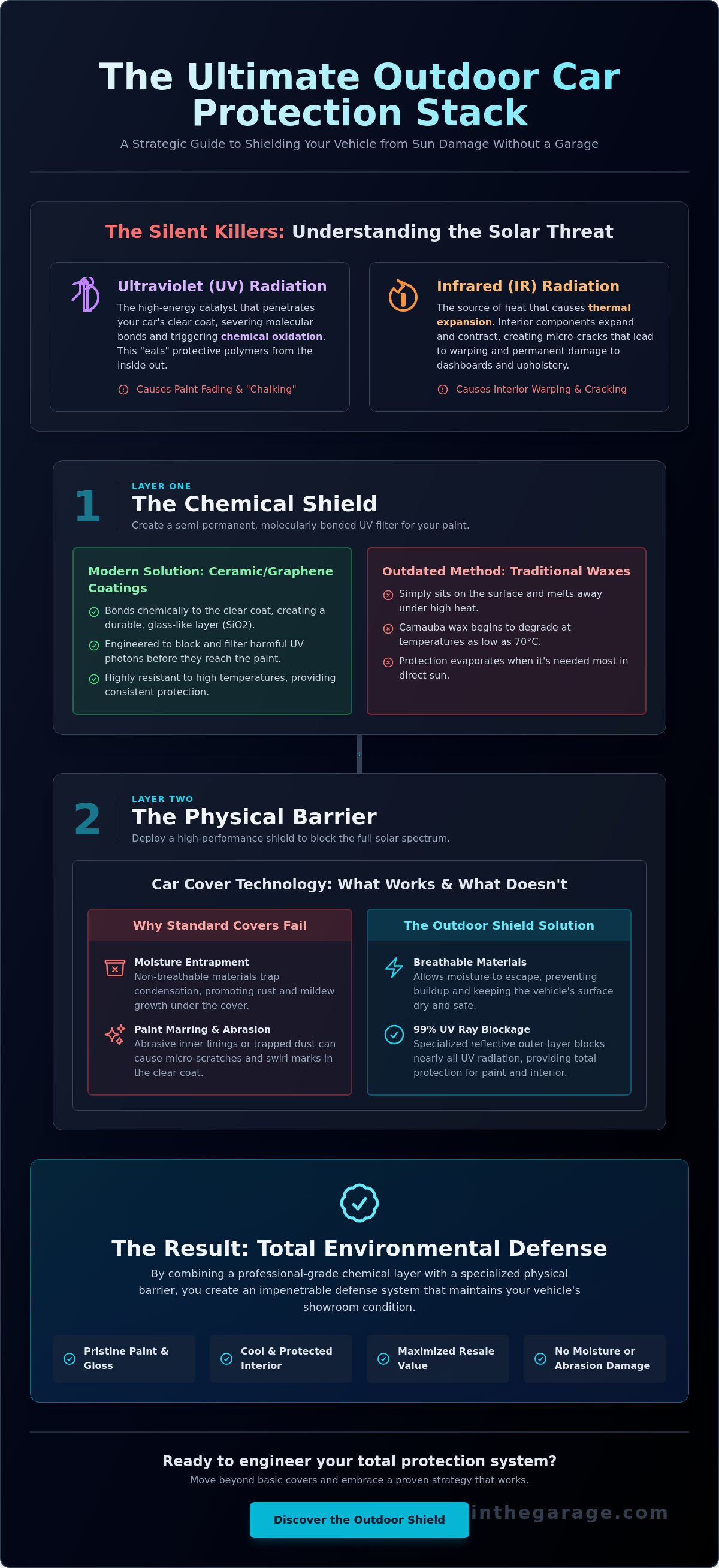
Sunlight is a relentless chemical force. It doesn't just sit on the surface; it penetrates the molecular structure of your vehicle. When you're protecting car from sun damage without a garage, you're fighting a battle against two distinct invisible enemies: Ultraviolet (UV) and Infrared (IR) radiation. These aren't just weather conditions. They're catalysts for a slow-motion chemical breakdown that compromises your car's structural and aesthetic integrity.
UV radiation acts as a high-energy catalyst. It triggers chemical oxidation within the clear coat, effectively "eating" the protective polymers from the inside out. IR radiation provides the heat. This leads to thermal expansion. Materials like plastic and leather expand and contract at different rates. This constant movement creates micro-cracks that eventually become visible splits. By mid-2026, climate data confirms that extreme heat cycles are becoming the standard rather than the exception. This makes "heat soak" a critical concern. It isn't just about the surface. Prolonged exposure weakens adhesive bonds and stresses internal electronics, leading to failures that are expensive to rectify.
Paint Oxidation and Clear Coat Failure
The clear coat is your vehicle's first line of defense. However, constant exposure leads to a process known as The Science of Photo-oxidation. This chemical breakdown occurs when UV photons sever the molecular bonds of the paint binders. You'll notice the early warning signs before the catastrophic peeling begins. Look for "chalking," a white powdery residue on the surface, or a distinct loss of gloss that no amount of washing can fix. Once this whitening starts, the pigment vibrancy is already compromised. Protecting car from sun damage without a garage requires stopping this molecular decay before it reaches the primer.
Interior Degradation: Dashboards and Upholstery
Your car’s cabin acts as a greenhouse. Even on a moderate day, the interior temperature of a sealed vehicle can exceed 70°C. While standard automotive glass blocks most UV-B rays, it often fails to stop the full solar spectrum. UV-A and IR radiation pass through easily. This heat soak destroys leather tanning agents and leeches plasticizers from vinyl. The result is a dashboard that warps and upholstery that loses its structural flexibility. Glass alone is an insufficient shield. You need a strategy that addresses this trapped thermal energy before it causes permanent warping and brittle surfaces.
The Chemical Layer: Coatings, Sealants, and Films
Traditional carnauba wax is a relic of a different era. It begins to degrade at temperatures as low as 70°C. In a high-heat outdoor environment, this means your protection evaporates exactly when you need it most. Protecting car from sun damage without a garage requires a more resilient, molecular solution. Modern chemistry has replaced these soft waxes with advanced Graphene and Ceramic technologies that offer a semi-permanent UV filter. These materials don't just sit on the paint. They bond to it. They create a hardened barrier that resists the chemical oxidation that leads to clear coat failure.
Relying solely on one method is rarely enough for long-term preservation. We advocate for a "belt and braces" approach. This strategy integrates high-performance chemical layers with a robust physical barrier. While coatings manage UV radiation at the molecular level, they cannot fully mitigate the thermal expansion of body panels. By combining a professional-grade coating with a high-performance Outdoor Shield, you create an impenetrable defense system against the full solar spectrum.
Ceramic Coatings: The UV Shield
Ceramic coatings utilize Silicon Dioxide (SiO2) to create a sophisticated, glass-like layer over your clear coat. This layer is highly hydrophobic and specifically engineered to block UV photons. For vehicles parked 24/7 in the sun, a high-quality coating provides essential sacrificial protection. It takes the brunt of the environmental assault so your paint doesn't have to. However, durability depends on maintenance. You must use pH-neutral cleansers to ensure the UV inhibitors remain active and the surface remains free of contaminants that could compromise the bond.
Paint Protection Film (PPF) Pros and Cons
Paint Protection Film offers a thicker, more durable physical and chemical hybrid. One of the most impressive advancements in 2026 PPF technology is the "self-healing" property. When the sun heats the film, minor surface abrasions and swirl marks naturally level out. Many owners fear that PPF will yellow over time. This is largely a myth with modern films. High-end aliphatic polyurethane resins are now tested to remain optically clear even under extreme solar loads. While the initial investment is higher than a standard sealant, the long-term protection for a daily driver is unparalleled. As noted in industry guides on Protecting a Car Without a Garage, these physical layers are vital for maintaining an asset's value when indoor storage isn't an option.
The Physical Barrier: Why Most Car Covers Fail (and What Works)
A generic car cover is often a wolf in sheep's clothing. While many owners believe a thick, waterproof fabric is the ultimate solution for protecting car from sun damage without a garage, they frequently trade UV fading for mechanical destruction. The primary culprit is the "Sandpaper Effect." When wind catches a loose-fitting cover, the fabric vibrates against the paintwork. If even a microscopic layer of dust exists between the two surfaces, the cover acts as an abrasive, marring the clear coat and creating thousands of swirl marks. True protection requires a barrier that remains stationary and utilizes a non-abrasive inner lining.
Thermal transfer is another critical failure point for budget-grade materials. Darker or low-quality fabrics can actually absorb heat and radiate it directly onto the vehicle's surface, effectively "cooking" the car underneath. This trapped heat accelerates the degradation of rubber seals and adhesive bonds. For comprehensive vehicle protection from sun damage, you must utilize a shield that reflects the full solar spectrum rather than simply absorbing it. Modern engineering has evolved to provide specialized outdoor shields that manage this thermal load through multi-layered, reflective outer skins.
Breathability vs. Waterproofing
Waterproofing is a dangerous metric if it lacks breathability. A non-breathable cover traps ground moisture and condensation against the vehicle. This creates a high-humidity micro-environment that leads to "white spots" in the clear coat and accelerated corrosion on exposed metal. The ideal solution utilizes a high Moisture Vapor Transmission Rate (MVTR). This allows internal humidity to escape while the outer layer remains resilient against external liquid. Our Outdoor Shield is engineered with this specific balance in mind, ensuring that your vehicle stays dry without suffocating under trapped vapors.
The Problem with Fitment
Universal fit is a hazard. If a cover isn't tailored to your specific vehicle's dimensions, it becomes a sail in windy conditions. Secure tie-downs and elasticized hems are mandatory for outdoor preservation. A loose cover doesn't just scratch the paint; it can eventually blow off, leaving your car entirely exposed. When comparing soft-shell covers to rigid-frame portable options, the priority must always be a snug, stable fit that prevents movement. Precision-engineered enclosures like the Ultimate Shield provide this stability, offering a premium guardian for those who demand showroom quality in a driveway environment.
How to Protect Your Car Without a Garage: A Step-by-Step Strategy
Achieving total preservation requires more than a single product. It demands a meticulous workflow. When you are protecting car from sun damage without a garage, you must think in layers. This "Protection Stack" ensures that if one defense is compromised, others remain intact. Follow this definitive roadmap to maintain a showroom finish in any driveway.
- Step 1: Surface Decontamination. Remove all bonded contaminants. A standard wash isn't enough to prepare the paint for long-term shielding.
- Step 2: Chemical Filtering. Apply a high-load UV sealant or professional grade coating to manage radiation at the molecular level.
- Step 3: Tactical Positioning. Use the environment to your advantage. Park facing North to minimize direct cabin exposure during peak solar hours.
- Step 4: Physical Shielding. Deploy a tested, breathable barrier like our Outdoor Shield - Car to block 99% of UV rays.
- Step 5: Meticulous Maintenance. Perform monthly inspections to ensure layers haven't been compromised by industrial fallout or bird droppings.
Preparing the Surface
Never cover a dirty vehicle. Dust trapped between the paint and a cover acts as an abrasive. Begin with a deep decontamination. Use a clay bar to pull embedded metallic particles and industrial fallout from the clear coat. This creates a surgically clean surface that allows sealants to bond properly. For the interior, apply a specialized UV protectant to the dashboard and trim. This prevents the plasticizers from leaching out under extreme thermal loads. Proper preparation is the foundation of long-term asset value.
Deploying the Shield
Installation technique matters. Don't drag the cover across the body panels. Instead, roll the shield from the center out to the bumpers. This minimizes friction and prevents surface marring. Ensure you manage the "heat chimney" effect by utilizing built-in ventilation ports. This allows rising heat to escape rather than pooling against the roof. Finally, secure the vehicle. Use non-abrasive tie-downs to prevent high-wind displacement. A stable shield is a safe shield. For those seeking the ultimate in driveway storage, the Ultimate Shield - Car provides a rigid-frame solution that eliminates contact with the paint entirely.
The Ultimate Shield: Engineering Total Outdoor Protection
Professional preservation demands a specialized solution. While previous sections outlined the chemical and tactical steps of a "Protection Stack," the final layer determines the longevity of the entire system. Protecting car from sun damage without a garage is a challenge we have solved through meticulous engineering. Our Outdoor Shield - Car represents a revolutionary shift in driveway storage. It moves beyond the concept of a simple fabric cover. It is a precision-engineered guardian designed for those who refuse to settle for mediocrity.
The core of this technology lies in its specialized multi-layer construction. These materials are proven to block 99% of UV radiation, effectively neutralizing the photo-oxidation risks that lead to clear coat failure. Unlike budget alternatives, our shields maintain active breathability. This ensures that moisture and heat are never trapped against the paintwork. It is about managing the micro-environment. For owners in extreme climates, the Ultimate Shield - Car provides a rugged, rigid-frame defense. It's tested. It's proven. It's the definitive choice for the modern enthusiast.
The In The Garage Advantage
Protecting car from sun damage without a garage is no longer a matter of guesswork. We have tested our premium materials against the record solar peaks recorded in early 2026. The results are conclusive. Our precision-fit designs eliminate the wind-induced marring that plagues universal drapes. By securing the shield tightly to your vehicle’s specific contours, we prevent the sandpaper effect entirely. Enthusiasts in sun-drenched regions report that their vehicles maintain showroom vibrancy, preserving thousands in resale value. We don't just cover your car; we shield your investment.
Beyond the Driveway: The Showcase Model
For the ultimate in outdoor-rated protection, the Showcase - Car offers an uncompromising approach. This inflatable enclosure creates a physical "bubble" around the vehicle, completely removing the possibility of contact with the paint. It utilizes active airflow technology to prevent the formation of condensation and mold. This constant circulation ensures the interior remains dry and the exterior stays pristine, even in high-humidity environments. It is the gold standard for high-value assets stored outside. Protect your investment today with the In The Garage Outdoor Shield and join a community of owners who prioritize the highest level of care for their vehicles.
Secure Your Automotive Legacy
Maintaining a showroom finish requires more than hope. It demands a scientifically backed "Protection Stack." You now understand that protecting car from sun damage without a garage is a multi-layered mission. It begins with chemical filters to stop molecular oxidation and ends with a physical shield that manages the thermal environment. By prioritizing breathability and precision fitment, you eliminate the risks of moisture entrapment and wind-induced marring that plague inferior covers.
We bring over 30 years of automotive protection expertise to every solution we engineer. Our materials are tested and proven for extreme UV environments; ensuring your vehicle remains a pristine asset rather than a victim of the elements. These premium solutions are trusted by collectors worldwide who demand uncompromising quality. Don't let the sun dictate your car's future value. Take the definitive step toward total preservation and Secure Your Vehicle with the Ultimate Outdoor Shield today. Your car deserves a guardian that is as dedicated to excellence as you are.
Frequently Asked Questions
Does a car cover really protect from sun damage?
A premium cover is the definitive solution for protecting car from sun damage without a garage. It serves as a sacrificial layer that absorbs UV radiation before it can reach the clear coat. This prevents the chemical breakdown of the paint's molecular bonds. High-performance shields also mitigate the greenhouse effect within the cabin; protecting the dashboard and upholstery from thermal degradation.
Can a car cover scratch my paint if used outdoors?
Scratching only occurs if the cover is poorly fitted or applied to a contaminated surface. Wind movement causes loose fabric to act like an abrasive against the paint. You can prevent this by ensuring the vehicle is clean and using a precision-engineered shield with a non-abrasive inner lining. Secure tie-downs are essential to eliminate friction during high-wind events.
What is the best color for a car cover in high-sun areas?
Silver or light grey is the optimal choice for high-sun environments. These shades possess high reflectivity; bouncing solar energy away from the vehicle surface. Darker fabrics absorb infrared radiation; which can lead to excessive thermal transfer. A reflective outer skin is a cornerstone of any professional-grade outdoor protection strategy.
How often should I wax my car if it is parked outside without a garage?
Expect to apply protection every two to three months if you rely on traditional products. High-heat environments accelerate the degradation of standard waxes. For vehicles parked outside 24/7, we recommend upgrading to a ceramic-based sealant. These offer superior durability and more robust UV inhibitors that remain active far longer than organic carnauba.
Is it better to park in the shade of a tree or in the direct sun with a cover?
Direct sun with a specialized shield is generally safer than tree shade. While trees provide cooling, they also introduce sap and acidic bird droppings. These contaminants can etch the clear coat in hours. Using a UV-reflective cover is a more reliable method for protecting car from sun damage without a garage while avoiding biological hazards.
Can sun damage be reversed once it starts?
You can often rectify minor surface oxidation through multi-stage paint correction. This process removes the dead layer of clear coat to reveal the fresh paint beneath. However, severe damage like clear coat failure or deep leather cracks is permanent. Once the protective layers have been breached, the only solution is often a costly professional repaint.
What happens if I leave a waterproof cover on my car for too long?
Trapped moisture is the primary danger of non-breathable waterproof covers. If humidity cannot escape, it creates a high-heat micro-environment that can cause the clear coat to turn cloudy or white. This is why active breathability is a non-negotiable feature. High-end shields manage this risk by allowing vapor to pass through the fabric while keeping liquid water out.
Are inflatable car bubbles safe for outdoor use in the sun?
Inflatable enclosures are safe only if they are engineered with UV-stabilized materials. Our Showcase - Car is specifically designed to handle outdoor solar loads while maintaining constant airflow. This active ventilation is critical. It prevents the internal temperature from spiking and ensures that condensation never settles on the vehicle's surface.