


What if the best case for car protection isn’t a pitch, but a decision you make together? Convincing spouse to buy car protection can feel difficult when one of you sees peace of mind and the other sees another expense. Both concerns deserve a fair hearing, especially when you both care about the car, its appearance, and the space it occupies.
A practical conversation starts with your needs, not pressure to choose a particular solution. Consider how your vehicle is stored and used, what you want to protect it from, and how a protection option would fit your routine. It also helps to understand how an inflatable “active” cover differs from a traditional cover that rests directly on the vehicle. Comparing those details can help you decide together whether a particular approach makes sense.
Key Takeaways
- Make convincing spouse to buy car protection a shared conversation about caring for a vehicle you both value, not a pitch for a particular purchase.
- Compare options by considering where the car is stored, what it may be exposed to, and how protection fits your daily routine.
- Understand the difference between a traditional cover that rests on the vehicle and an inflatable active cover system.
- Agree on the concern you want to address and a practical next step. If you see things differently, revisit the vehicle’s actual storage needs without pressure.
Why car protection can be a shared decision, not a personal indulgence
You may both care about the same car and still see a protection purchase differently. One partner may focus on preserving its appearance and condition; the other may weigh the expense against household priorities. Neither view is unreasonable. The discussion gets more useful when you identify the vehicle’s needs before settling on a product.
Start with the car itself. How often do you use it? Where is it stored? What conditions does it face there? Then talk about what matters to each of you, such as keeping dust off the vehicle, protecting it from outdoor exposure, or choosing an option that fits your storage space and routine. Those answers give you a shared basis for comparing solutions without assuming one option suits every car or household.
How to raise the subject without turning it into a sales pitch
Begin with an open question: “What would we most like to preserve about the car, and why?” Listen before suggesting a solution. Discuss concerns about budget, storage space, appearance, and the effort involved in using a protection system. That keeps the conversation focused on practical trade-offs rather than who is right.
It can also help to distinguish physical vehicle protection from products with similar-sounding promises. For example, an extended warranty concerns warranty or service-contract coverage. A vehicle cover or inflatable “active” cover is a physical protection approach. They serve different purposes, so compare each based on what it is designed to address.
Instead of asking for an immediate yes, look at the storage situation together. Note whether the car is kept indoors or outdoors, what exposure concerns you have, and how a protection option could fit the available space and your routine. If you’re convincing spouse to buy car protection, the strongest case is a shared assessment of the need, not pressure to choose a product before you agree on what matters.
How to compare car protection options and address the cost concern
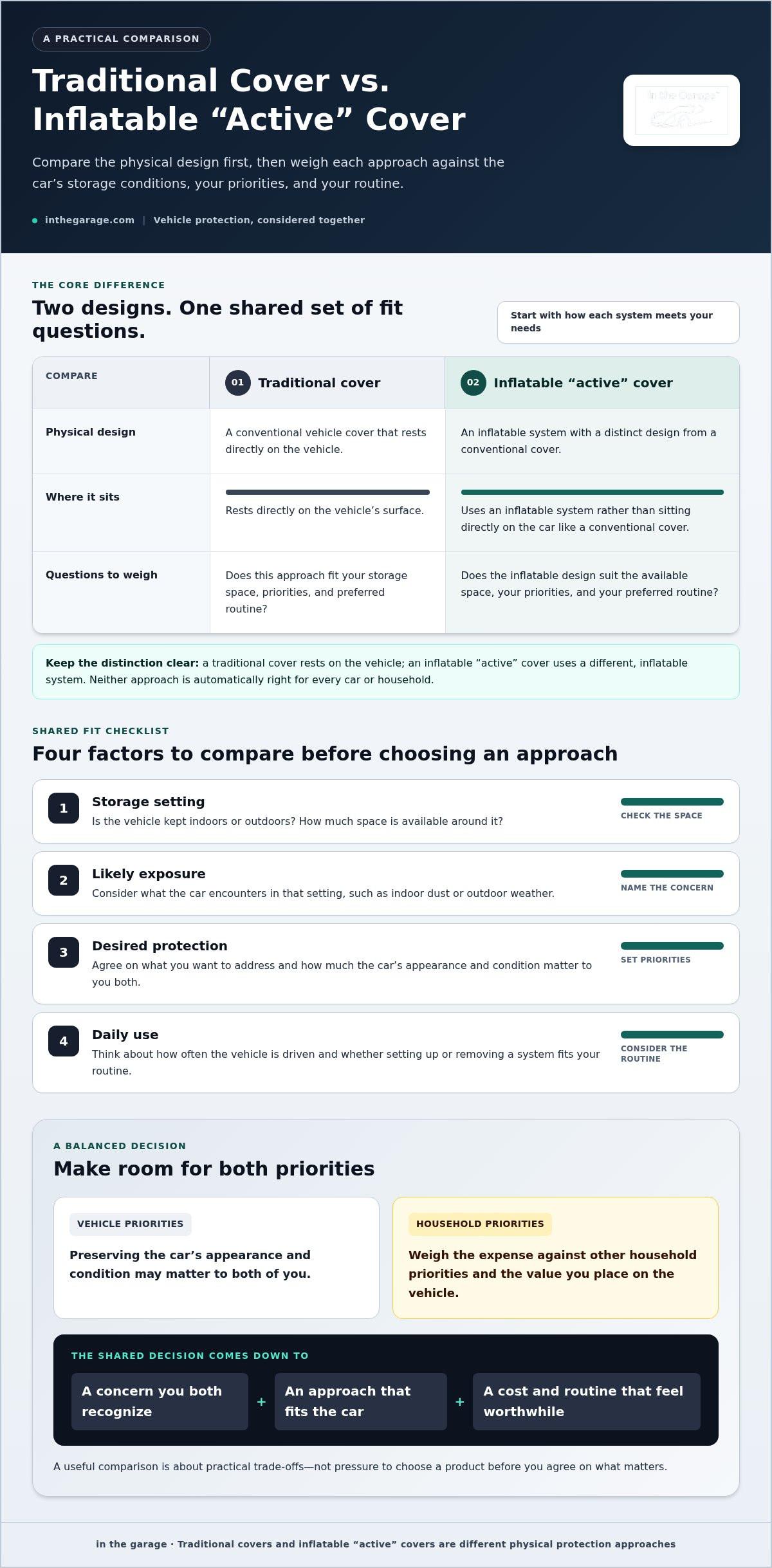
A fair comparison starts with the car’s actual storage conditions, not the price of a product in isolation. Review these factors together:
- 1. Storage setting: Is the vehicle kept indoors or outdoors? How much space is available around it?
- 2. Likely exposure: Consider what the car encounters in that setting, such as dust indoors or outdoor weather.
- 3. Desired protection: Decide what you want to address and how important the car’s appearance and condition are to you both.
- 4. Daily use: Think about how often the vehicle is driven and whether setting up or removing a protection system fits your routine.
Next, compare the form each option takes. A traditional cover rests directly on the vehicle’s surface. An inflatable “active” cover is different: it uses an inflatable system rather than sitting directly on the car like a conventional cover. Consider how each approach fits your storage space, priorities, and preferred routine instead of choosing based on which sounds more impressive.
Which protection approach fits your vehicle and storage space?
For indoor storage, ask whether dust or your preferred storage setup is the main concern. If so, explore The Ultimate Guide to Indoor Car Cover Solutions for more context. In The Garage offers indoor car covers and indoor car bubbles, as well as outdoor protection options. If you’re considering an inflatable active cover, make sure you both understand its distinct design and consider whether it suits the available space. You can explore vehicle protection options together.
To address cost, compare the purchase with other household priorities and the value you place on the vehicle. A useful financial responsibility resource from the Consumer Financial Protection Bureau can prompt careful consideration of money decisions. For convincing spouse to buy car protection, focus on whether an option addresses a shared concern and feels worthwhile within your budget, not on pressure to spend.
How to reach a joint decision and choose a practical next step
A good outcome isn’t necessarily choosing the most comprehensive option. It’s agreeing on the problem you want to solve, the approach that fits your vehicle and storage conditions, and what would make the decision worthwhile to both of you. Summarize each partner’s priorities, then name the trade-offs plainly: cost, space, appearance, or the effort involved in regular use.
If you’re still apart, pause rather than escalating persuasion. Revisit the car’s actual storage conditions and compare the options against those needs. If you’re considering a service contract rather than a physical cover, the FTC explains how to evaluate a vehicle protection plan. These are different forms of protection, so be clear about what each is intended to address.
Turn the conversation into a decision you can both stand behind
Agree on one practical next step, such as comparing relevant protection categories together without committing to a purchase. For a closer look at inflatable garages and how an inflatable “active” cover differs from a conventional cover resting directly on the vehicle, read The Rise of Inflatable Garages. Then compare the options with your shared priorities in mind. Convincing spouse to buy car protection shouldn’t mean winning an argument; it means reaching a considered choice together.
You can explore vehicle protection options together and decide whether an approach suits your car, available space, and routine.
Choose your next step together
Protecting a car doesn’t have to be a personal indulgence or a debate to win. Start with what you both value about the vehicle, then weigh its storage conditions, your preferred protection approach, and how each option fits your budget and routine. A traditional cover rests on the vehicle, while an inflatable “active” cover uses a distinct inflatable system. Comparing those differences against your shared needs can make convincing spouse to buy car protection a respectful, practical conversation.
In The Garage offers indoor and outdoor vehicle protection products, including covers and inflatable options. Take a considered look at the possibilities, then decide together what best fits your vehicle and storage setup.
Explore vehicle protection options together and take the next step with a choice you can both stand behind.
Frequently Asked Questions
How do I talk to my spouse about buying car protection?
Start with a shared concern, not a product pitch. Ask what each of you wants to preserve about the vehicle, then discuss its storage conditions, appearance, and how protection would fit your routine and budget. A practical approach to convincing spouse to buy car protection means listening to reservations, comparing relevant options, and agreeing on a next step without demanding an immediate decision.
Is a car cover worth it if the vehicle is already parked in a garage?
It depends on what you want to address in your garage. Consider whether dust is a concern, how the vehicle is stored, and whether adding protection suits your setup. Indoor car covers and inflatable car bubbles are different approaches to compare against those needs. A garage may shape the decision, but it doesn’t automatically settle whether additional protection makes sense for you.
What is the difference between a traditional car cover and an inflatable active cover?
A traditional car cover rests directly on the vehicle’s surface, while an inflatable “active” cover uses an inflatable system and does not sit on the vehicle like a conventional cover. That physical difference can influence which approach better suits your storage space and preferences. Compare how each option fits your vehicle’s setting and routine rather than assuming they work the same way.
How can we decide whether car protection fits our shared budget?
Discuss the purchase alongside your other household priorities and the value you place on the vehicle. Agree on the concern you want to address, then consider whether a protection approach fits your budget, storage space, and daily routine. If you don’t agree yet, pause and revisit the car’s actual conditions together. A considered decision should feel worthwhile to both partners, not pressured.
Disclaimer
Please note some articles may have AI generated content