


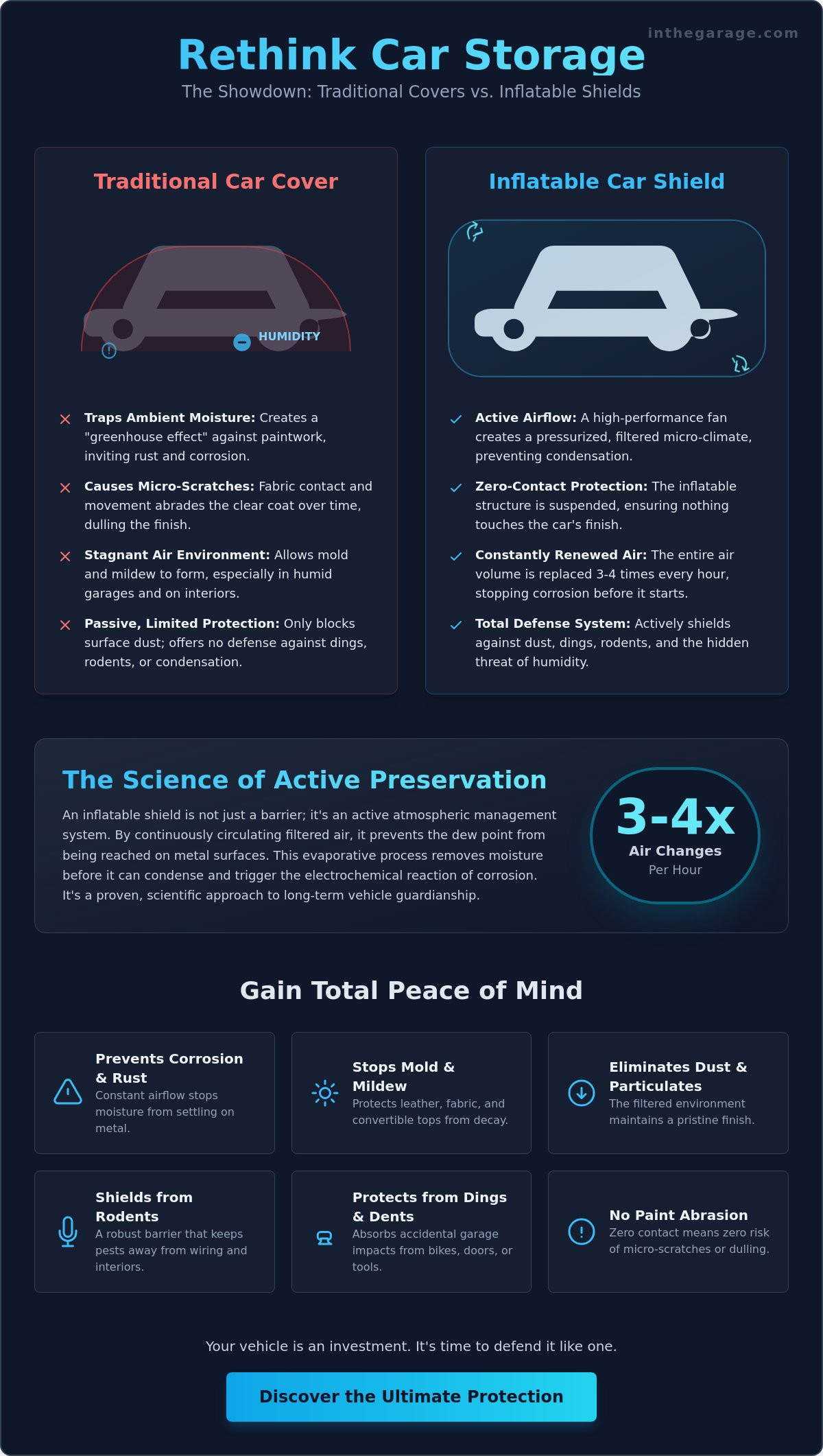
La tua tradizionale copertura per auto è probabilmente un nemico silenzioso per la tua vernice. Pur bloccando la polvere superficiale, intrappola contemporaneamente l'umidità ambientale contro il metallo, favorendo proprio la corrosione che cerchi di prevenire. Passare a un sistema gonfiabile per la conservazione dell'auto cambia completamente le carte in tavola. È la differenza tra coprire semplicemente un bene e difenderlo attivamente all'interno di un microclima pressurizzato e filtrato.
Comprendiamo che il tuo veicolo rappresenta sia un investimento significativo sia una passione personale. Meriti la tranquillità di sapere che la tua auto è protetta dai danni causati da roditori, dai graffi accidentali in garage e dalla minaccia insidiosa dell'umidità. In questa guida, imparerai come scegliere e padroneggiare l'installazione di un sistema di conservazione gonfiabile. Esamineremo i vantaggi tecnici di ventilatori ad alte prestazioni che rinnovano il volume d'aria tre o quattro volte ogni ora. Dalla robusta affidabilità di uno Scudo Esterno all'eleganza estetica di un'esposizione auto Showcase, scoprirai come mantenere un ambiente impeccabile e privo di polvere a lungo termine.
Punti chiave
- Scopri perché l'aria stagnante è il nemico della conservazione e come un flusso d'aria costante previene i pericoli nascosti dell'umidità intrappolata.
- Valuta le esigenze specifiche del tuo ambiente per scegliere lo scudo gonfiabile ideale per la conservazione dell'auto, che tu abbia bisogno di esposizione interna o protezione esterna.
- Segui un protocollo di installazione professionale che assicura che il tuo veicolo sia posizionato correttamente e che la struttura gonfiabile sia orientata per una protezione massima.
- Scopri le differenze ingegneristiche tra coperture standard e sistemi pressurizzati che sostituiscono l'aria più volte all'ora per fermare la corrosione prima che inizi.
- Ottieni completa tranquillità sfruttando standard di materiali premium e trent'anni di esperienza specializzata nella tutela di veicoli di alta gamma.
Oltre la bolla: perché lo stoccaggio gonfiabile è lo strumento definitivo per la conservazione
Le tradizionali coperture per auto sono state a lungo lo standard per la conservazione dei veicoli, ma spesso agiscono come una lama a doppio taglio. Pur offrendo uno strato base di protezione contro la polvere leggera, sono strumenti passivi che non affrontano le minacce atmosferiche che il tuo veicolo deve affrontare. Uno scudo car storage blow up rappresenta un cambiamento fondamentale nella tecnologia di conservazione. Non è solo una copertura; è un microambiente pressurizzato. Creando una separazione fisica tra il veicolo e l'atmosfera esterna, questi sistemi prevengono l'"effetto serra" in cui l'umidità rimane intrappolata contro la vernice, causando ossidazione e ruggine.
Il segreto di questa protezione superiore risiede nella ventola a pressione costante. A differenza di un telo standard che aderisce alla carrozzeria, uno scudo gonfiabile utilizza un flusso continuo di aria filtrata per mantenere la sua integrità strutturale. Questa pressione d'aria mantiene il materiale in PVC sospeso, assicurando che nulla tocchi la finitura della tua auto. Crea un santuario dove l'aria è sempre in movimento, prevenendo la stagnazione che permette a muffa e funghi di insediarsi in garage o magazzini umidi.
Il fallimento della protezione passiva
Molti proprietari credono che i tessuti "traspiranti" offrano una sicurezza adeguata. In realtà, questi materiali permettono ancora alle particelle fini di depositarsi sulla superficie. Quando le temperature variano, queste coperture possono espandersi e contrarsi, causando l'attrito del tessuto contro la vernice. Questa abrasione microscopica alla fine opacizza la vernice trasparente. Al contrario, un Indoor Shield o Outdoor Shield elimina completamente il contatto tra tessuto e vernice. Anche in ambienti ventilati, non c'è rischio di graffi causati dal vento perché la struttura rimane rigida e indipendente dalla silhouette del veicolo.
L'evoluzione del garage gonfiabile
La conservazione dei veicoli è andata ben oltre le semplici coperture antipolvere. Le moderne strutture gonfiabili si sono evolute in avanzati sistemi di controllo atmosferico utilizzati da musei e collezionisti seri in tutto il mondo. Questa evoluzione ha portato allo sviluppo di opzioni in PVC ad alta trasparenza, come lo Showcase, che consente una conservazione pronta per l'esposizione senza compromettere la sicurezza. Scegliere un sistema car storage blow up è un impegno verso l'eccellenza. È un passo verso uno standard professionale in cui tappetini base in PVC da 10 mm e costruzione di alta qualità sostituiscono le alternative fragili del passato. Questo metodo è ora la scelta comprovata per chi considera il proprio veicolo un bene significativo e non solo una macchina. Offre un livello di affidabilità robusta che le coperture passive semplicemente non possono eguagliare.
La Scienza del Flusso d'Aria: Come le Protezioni Gonfiabili Prevengono la Corrosione
Il raffreddamento evaporativo nel contesto della conservazione dei veicoli si riferisce al movimento continuo dell'aria che facilita la rapida rimozione dell'umidità superficiale prima che possa depositarsi come acqua liquida. Mentre la nostra precedente analisi delle barriere fisiche ha stabilito la necessità di separazione, il vero vantaggio tecnico di un sistema car storage blow up risiede nella sua gestione attiva dell'atmosfera. Queste unità sono progettate per rinnovare l'intero volume d'aria all'interno della protezione da tre a quattro volte ogni ora. Questo scambio costante garantisce che l'aria stagnante e umida non possa mai ristagnare contro i componenti sensibili del tuo veicolo.
La corrosione è un processo elettrochimico che richiede un catalizzatore, tipicamente l'umidità. Mantenendo un punto di rugiada costante all'interno del micro-ambiente, queste protezioni impediscono all'acqua di condensarsi su superfici metalliche fredde come blocchi motore, componenti della sospensione o dischi dei freni. Questo approccio scientifico è fondamentale per prevenire la corrosione in ambienti dove sono comuni rapidi sbalzi di temperatura. Quando investi in una soluzione professionale come Ultimate Shield, stai adottando un metodo testato di stabilizzazione climatica che supera di gran lunga le capacità di un garage standard o di un semplice telo di plastica.
Comprendere il Processo Evaporativo
Il flusso d'aria attivo fa più che proteggere l'esterno. Rimuove l'umidità dalle aree difficili da raggiungere del telaio e del vano motore prima che si formi la condensa. Questo è particolarmente vantaggioso per i veicoli con interni in pelle o tetti convertibili. L'aria stagnante spesso porta all'assorbimento di umidità nei materiali organici, il che può causare la formazione di muffa o il degrado dei materiali. Un ambiente sigillato e pressurizzato mantiene uno stato stabile che un garage aperto semplicemente non può replicare. Crea un santuario dove l'aria rimane asciutta e le superfici restano impeccabili.
Filtrazione e Purezza dell'Aria
La qualità dell'aria è importante quanto il volume d'aria mosso. Schiuma ad alta densità o filtri al carbone lavabili nella ventola di aspirazione bloccano polvere microscopica, polline e particelle abrasive dall'entrare nell'involucro. Questo livello di purezza è essenziale per proteggere l'elettronica sensibile dalla polvere carica di elettricità statica che può causare cortocircuiti o guasti a lungo termine dei componenti. Filtrando i contaminanti, il sistema previene anche l'odore di muffa che spesso affligge le auto conservate a lungo termine. Il tuo veicolo rimane in uno stato appena dettagliato, libero dai detriti ambientali che tipicamente si depositano nelle fessure del cruscotto o nelle pieghe di un sedile. È un guardiano sofisticato per i tuoi beni automobilistici più preziosi.
Scegliere la tua fortezza: confronto tra modelli Shield e Showcase
Scegliere il sistema gonfiabile giusto per la conservazione dell'auto è una decisione strategica basata sull'ambiente specifico del tuo veicolo. Un garage residenziale ad alto traffico presenta rischi diversi rispetto a un magazzino isolato e climatizzato. Hai bisogno di un sistema che bilanci il controllo atmosferico con la sicurezza fisica. Sebbene la tecnologia di base del flusso d'aria filtrato rimanga costante nella nostra gamma, il design strutturale e le specifiche dei materiali variano per soddisfare diverse esigenze operative. Scegliere il modello sbagliato può portare a una protezione inadeguata o a una complessità inutile nella tua routine quotidiana.
L'Indoor Shield è la scelta definitiva per la conservazione a lungo termine in spazi protetti. Fornisce un microambiente sigillato che protegge da polvere e umidità. Per chi cerca il massimo livello di durata, l'Ultimate Shield offre un ingegneria potenziata. Utilizza tappetini base in PVC premium da 10 mm, offrendo una base più spessa e resistente alle perforazioni rispetto allo standard industriale da 8 mm. Questo modello è progettato per gli appassionati che richiedono una soluzione "installala e dimenticala" con la massima integrità strutturale.
Requisiti per Interni vs. Esterni
Conservare un veicolo all'aperto richiede un approccio decisamente più robusto. L'Outdoor Shield è progettato con PVC a temperatura controllata che rimane flessibile a freddo estremo e stabile a caldo elevato. A differenza delle versioni per interni, queste unità devono includere inibitori UV specializzati per evitare che il materiale si opacizzi o diventi fragile sotto l'esposizione costante al sole. La gestione delle sollecitazioni del vento è anche un fattore critico. I nostri garage gonfiabili per esterni presentano sistemi di ancoraggio rinforzati e anelli a D resistenti per garantire che la struttura rimanga sicura durante condizioni meteorologiche avverse. È una fortezza robusta che porta una protezione di livello museale nel tuo vialetto.
Il vantaggio "Drive-In" della Vetrina
Il modello Showcase rappresenta il massimo della comodità e dello stile estetico. Mentre le capsule tradizionali utilizzano un metodo "zip-over" in cui la copertura superiore viene posata sull'auto, lo Showcase utilizza una struttura gonfiabile che mantiene la sua forma anche quando la porta è aperta. Questo design "drive-in" è la scelta preferita per i veicoli usati frequentemente. Puoi accedere alla tua auto senza sgonfiare completamente il sistema di protezione, rendendolo una parte funzionale del tuo garage piuttosto che una semplice borsa di stoccaggio. Trasforma il tuo spazio di conservazione in un'esposizione professionale, dimostrando che la protezione totale non deve compromettere l'accessibilità. Questo modello colma il divario tra uno scudo protettivo e una galleria automobilistica di alto livello.
Guida Passo-Passo: Come Montare la Tua Protezione Gonfiabile per Auto
Un'installazione di successo per la protezione gonfiabile dell'auto inizia molto prima di collegare la ventola. Richiede un approccio metodico per garantire che il micro-ambiente rimanga intatto fin dal primo giorno. Inizia pulendo a fondo il pavimento del garage. Anche piccoli sassi o detriti possono creare punti di pressione contro il tappetino base in PVC resistente nel tempo. Contemporaneamente, assicurati che il veicolo sia pulito e completamente asciutto. Introdurre un'auto bagnata in un ambiente sigillato costringe il sistema a lavorare di più per stabilizzare i livelli di umidità interna, potenzialmente ritardando il processo di conservazione.
Una volta preparata la superficie, srotola il tappetino di base. Orienta l'alloggiamento della ventola verso la presa di corrente designata per evitare di stendere i cavi in aree ad alto passaggio. Centra il veicolo sul tappetino, lasciando margini uguali su tutti i lati. Questo allineamento è fondamentale; se l'auto è troppo avanti o indietro, la copertura superiore tirerà in modo irregolare. Ciò crea tensioni inutili sulle cerniere e può impedire una perfetta tenuta. Per chi utilizza l'Ultimate Shield - Car, la pompa d'aria ad alte prestazioni da 800W si occuperà del lavoro pesante, portando la struttura all'altezza completa in meno di cinque minuti.
Lista di Controllo Pre-Installazione
- Lava e asciuga l'esterno del veicolo. Lascia raffreddare motore e scarico fino alla temperatura ambiente per evitare picchi immediati di condensa all'interno della bolla.
- Controlla il pavimento per oggetti appuntiti. Sebbene i nostri tappetini in PVC da 10 mm siano progettati per una robusta affidabilità, prevenire le forature è sempre meglio che ripararle.
- Verifica la vicinanza alla fonte di alimentazione. Usa un proteggi-sovratensioni di alta qualità per proteggere i motori delle ventole di precisione dalle fluttuazioni elettriche.
Consigli Pro per l'Installazione Singola
Installare uno scudo da solo è del tutto gestibile con la tecnica giusta. Usa le gomme del veicolo per ancorare il tappetino base mentre srotoli la copertura superiore. Quando tiri il PVC sopra il tetto, fallo lentamente per evitare di impigliare gli specchietti laterali o le antenne. Se incontri resistenza, fermati e aggiusta invece di forzare il materiale. Una volta che l’unità è gonfiata, controlla il posizionamento del filtro. La ventola dovrebbe funzionare a un silenzioso 28,1 dB(A), fornendo uno scambio d’aria metodico che stabilizza l’ambiente nelle prime 24 ore. Se sei pronto a migliorare il tuo garage, puoi esplorare la nostra gamma completa di scudi professionali per trovare la soluzione perfetta per te.
Gestione a Lungo Termine dei Beni: Perché In The Garage è la Scelta Fiduciaria
Proteggere un veicolo di alto valore richiede più di una semplice barriera fisica. Richiede una collaborazione con uno specialista che comprenda le sfumature della conservazione automobilistica. Con oltre 30 anni di esperienza, In The Garage ha raffinato il concetto di copertura gonfiabile per auto fino a farne una scienza. Non vendiamo solo coperture; forniamo un sistema collaudato che salvaguarda il valore emotivo e finanziario dei tuoi beni. Questa eredità di eccellenza si basa su materiali premium e standard ingegneristici intransigenti.
La differenza si trova spesso nei dettagli che i concorrenti trascurano. Mentre lo standard del settore spesso si accontenta di tappetini base in PVC da 8 mm, noi utilizziamo uno standard da 10 mm per le nostre linee premium. Questo spessore extra offre una resistenza superiore a forature e usura a lungo termine. I nostri motori a ventola ad alta potenza sono altrettanto impressionanti. Offrono uno scambio d’aria metodico mantenendo un consumo energetico sorprendentemente basso. Basandoci sulle medie attuali dei consumi, far funzionare il trasformatore per un’unità esterna costa circa 4,00 $ al mese. Questo piccolo costo operativo è un investimento minimo rispetto alla conservazione della profondità della vernice e delle condizioni della pelle interna.
Standard di Qualità Intransigenti
Ogni Ultimate Shield viene sottoposto a un rigoroso processo di test per garantire che soddisfi i nostri standard di alta qualità. Riconosciamo che un sistema di stoccaggio è forte solo quanto il suo punto più debole. Ecco perché le nostre cerniere e cuciture sono progettate per resistere a migliaia di cicli senza guasti. Questa robusta affidabilità è supportata da un impegno per un supporto professionale. Quando scegli un Premium Guardian, investi in un prodotto progettato per la longevità e la totale tranquillità. Sosteniamo i nostri materiali perché sappiamo che sono stati testati in condizioni reali.
Entrare nella Comunità degli Appassionati
I professionisti del detailing e i collezionisti seri raccomandano costantemente i nostri sistemi perché colmano il divario tra utilità e stile. Una soluzione di conservazione dovrebbe apparire prestigiosa quanto il veicolo che protegge. Il nostro PVC ad alta trasparenza assicura che la tua auto rimanga il pezzo centrale anche mentre è protetta dagli agenti atmosferici. Non stai solo acquistando un prodotto; stai entrando a far parte di una comunità di proprietari con la stessa mentalità che danno priorità al massimo livello di cura. È tempo di elevare la tua strategia di conservazione. Proteggi oggi il tuo investimento con Ultimate Shield e vivi la scelta definitiva nella tutela del veicolo.
Proteggi la tua eredità automobilistica
Padroneggiare la conservazione del veicolo richiede di passare da coperture passive a un controllo attivo dell'atmosfera. Utilizzando un sistema car storage blow up, elimini i rischi di intrappolamento dell'umidità e abrasione superficiale che affliggono i metodi di conservazione tradizionali. Hai imparato come il flusso d'aria costante stabilizza il punto di rugiada e come scegliere il modello giusto, sia esso il robusto Outdoor Shield o l'elegante Showcase, garantisce che il tuo veicolo rimanga in uno stato impeccabile da esposizione.
In The Garage porta oltre 30 anni di esperienza nel settore in ogni soluzione di conservazione che offriamo. I nostri sistemi utilizzano materiali premium con protezione UV e sono affidati da collezionisti di livello mondiale per difendere i loro beni più preziosi. Non lasciare il condizionamento del tuo veicolo al caso durante la bassa stagione. È il momento di adottare un guardiano testato e di livello museale per il tuo garage. Scopri oggi la collezione Ultimate Shield e Showcase e goditi la tranquillità totale che deriva da una protezione professionale. La tua auto è pronta per la sua prossima presentazione.
Domande Frequenti
Cosa succede allo scudo gonfiabile per la conservazione dell'auto se manca la corrente?
Se manca la corrente, la struttura si sgonfierà lentamente e la copertura superiore si poserà delicatamente sul veicolo. Funziona essenzialmente come una tradizionale copertura per auto durante questo periodo, proteggendo la vernice da polvere e detriti. Una volta ripristinata l'elettricità, la ventola si riavvierà automaticamente e gonfierà nuovamente l'unità alla sua piena capacità strutturale senza bisogno di interventi manuali.
La ventola consumerà molta elettricità se funziona 24 ore su 24, 7 giorni su 7?
No, questi sistemi sono progettati per un'alta efficienza e un consumo energetico minimo. Il costo mensile di esercizio per un trasformatore da 110 volt, come quello usato per l'Outdoor Shield, è di circa 4,00 dollari. Questo basso costo operativo garantisce uno scambio d'aria continuo che sostituisce il volume interno tre o quattro volte ogni ora, rendendolo una strategia di conservazione a lungo termine conveniente.
Posso usare uno scudo gonfiabile per la conservazione dell'auto in un garage non riscaldato durante l'inverno?
Sì, utilizzare un sistema car storage blow up in uno spazio non riscaldato è uno dei modi più efficaci per prevenire la corrosione invernale. Le fluttuazioni di temperatura nei garage non riscaldati spesso causano condensa sulle superfici metalliche fredde. Il flusso d'aria attivo all'interno dello scudo impedisce a questa umidità di depositarsi, mentre il nostro PVC premium rimane flessibile e stabile anche in climi freddi.
Come pulisco il PVC della bolla per auto se si sporca di polvere?
Puoi mantenere la trasparenza del tuo scudo usando un panno morbido in microfibra e una soluzione delicata di sapone e acqua. È importante evitare detergenti abrasivi o spazzole rigide che potrebbero rovinare la superficie ad alta trasparenza di un modello Showcase. La pulizia regolare del PVC esterno e il lavaggio periodico dei filtri di aspirazione garantiranno che il sistema continui a funzionare al massimo delle prestazioni.
Lo scudo gonfiabile è sicuro da usare con un mantenitore di batteria?
Sì, queste unità sono progettate per ospitare in sicurezza mantenitori di batteria e altre apparecchiature elettroniche essenziali. La maggior parte dei modelli dispone di una porta dedicata o di una chiusura lampo sicura che consente ai cavi di alimentazione di passare attraverso la base senza compromettere la tenuta pressurizzata. Questo ti permette di mantenere la batteria del veicolo in condizioni ottimali mentre rimane protetta all'interno del microambiente filtrato.
Quanto tempo ci vuole per gonfiare completamente l'unità?
I tempi di gonfiaggio variano in base al modello e alla potenza dello strumento di gonfiaggio. Ad esempio, la pompa d'aria da 800W utilizzata per l'Ultimate Shield può gonfiare completamente la struttura in meno di 5 minuti. I modelli standard con ventilatore impiegano generalmente tra i 10 e i 15 minuti per raggiungere la pressione operativa completa, a seconda delle dimensioni complessive dell'involucro.
I roditori possono mordere il tappetino base dello scudo?
Sebbene nessun materiale sia completamente impermeabile a un parassita determinato, i nostri tappetini base in PVC da 10 mm offrono un livello di protezione significativamente superiore rispetto ai materiali standard del settore da 8 mm. Lo spessore e la durabilità di questo PVC resistente, combinati con l'assenza di punti di facile accesso, lo rendono un deterrente formidabile. Crea una barriera sicura molto più difficile da penetrare per i roditori rispetto a una copertura auto standard.
Devo lavare l'auto ogni volta prima di metterla nella bolla?
Devi assicurarti che il veicolo sia pulito e completamente asciutto prima di sigillarlo all'interno dell'ambiente. Conservare un'auto con sporco superficiale può causare graffi microscopici se il materiale dovesse mai toccare la vernice durante un'interruzione di corrente. Inoltre, introdurre un veicolo bagnato costringe il sistema a lavorare molto di più per rimuovere l'umidità in eccesso, il che può ritardare la stabilizzazione del microclima secco.