


Il tessuto stesso pensato per proteggere la tua auto potrebbe essere la ragione per cui sta silenziosamente perdendo valore. Mentre la maggior parte dei proprietari crede che qualsiasi copertura per auto sia meglio che lasciare un veicolo esposto, la realtà è che uno strato scelto male spesso agisce come una trappola per l'umidità anziché come uno scudo. Investi nella protezione perché apprezzi la finitura impeccabile della tua macchina. Tuttavia, un tessuto standard può causare condensa intrappolata, muffa e micro-graffi che opacizzano la brillantezza da esposizione.
È una frustrazione comune scoprire un veicolo dopo lo stoccaggio invernale solo per trovare ruggine o segni di nidi di roditori. Questa guida esplora perché un sistema di protezione efficace deve essere un microambiente controllato e non solo un telo. Imparerai a scegliere tra barriere passive e le più recenti tecnologie di protezione attiva per preservare l'integrità del tuo veicolo. Presenteremo opzioni ad alte prestazioni come Ultimate Shield - Car e Showcase - Car, assicurandoti di avere le conoscenze per mantenere una finitura perfetta e una totale tranquillità per anni.
Punti Chiave
- Comprendi perché la conservazione moderna dei veicoli richiede un passaggio dai semplici teli in tessuto a una tecnologia tessile sofisticata e multistrato.
- Impara come un sistema copertura per auto attivo crea un microambiente controllato che previene attivamente l'accumulo di muffa e funghi.
- Individua i fattori di stress distinti del tuo ambiente di stoccaggio, che tu stia combattendo la condensa in garage o l'esposizione estrema ai raggi UV all'aperto.
- Scopri l'importanza cruciale dei valori di trasmissione del vapore acqueo nella protezione della vernice trasparente della tua auto da danni permanenti.
- Acquisisci l'esperienza per scegliere un sistema di protezione che offra un'isolamento totale, garantendo che il valore del tuo investimento rimanga intatto per anni.
Cos'è una Copertura per Auto? Ridefinire la Conservazione del Veicolo
Una copertura per auto è molto più di un semplice telo. È una barriera specializzata progettata per isolare un veicolo dal degrado incessante dell'ambiente circostante. Per decenni, i proprietari si sono affidati a teloni di tela basici o sottili fogli di plastica. Questi metodi primitivi offrivano poco più di una protezione contro la polvere superficiale. Oggi, la definizione è notevolmente evoluta. La conservazione moderna si concentra sul mantenimento dell'integrità strutturale ed estetica di un bene di alto valore. Si tratta di un controllo ambientale totale. Tessuti tecnologici multistrato hanno sostituito i tessuti tradizionali. Questi materiali sono progettati per respingere i liquidi permettendo però alla vernice di respirare. L'obiettivo principale rimane la conservazione del bene. Un'auto pulita è un effetto secondario; un investimento protetto è l'obiettivo.
Il Ruolo della Barriera Protettiva
Uno scudo premium difende da un ampio spettro di minacce. Le radiazioni UV possono ossidare i trasparenti in pochi mesi, mentre la pioggia acida e le polveri industriali causano incisioni permanenti. Le abrasioni fisiche da animali domestici o contatti accidentali con attrezzi in garage portano a costose correzioni della vernice. Storicamente, prodotti come il Front-end bra venivano usati per protezioni localizzate, ma spesso danneggiavano intrappolando la polvere contro la finitura. La copertura totale è l'unico modo per garantire una conservazione uniforme. C'è anche un vantaggio psicologico nell'usare una copertura automobilistica. Un veicolo coperto è "fuori vista, fuori mente", un deterrente comprovato contro furti o atti vandalici opportunistici. Che si usi uno Scudo Esterno - Auto o un sistema specializzato per interni, l'obiettivo è creare un santuario per il veicolo.
Il Problema della Protezione Passiva
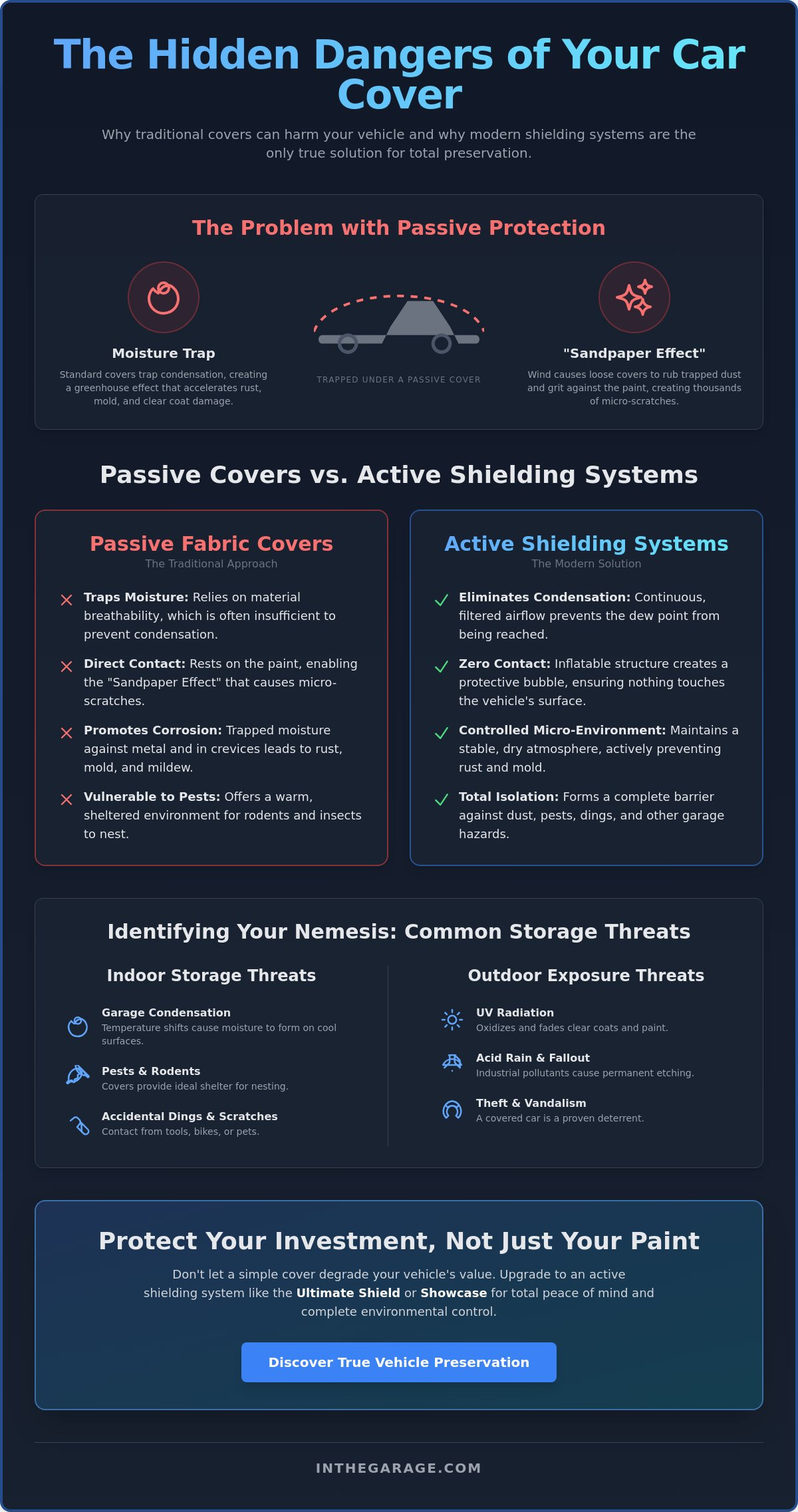
Le coperture passive tradizionali spesso nascondono un nemico invisibile: l'umidità. Quando le temperature cambiano, si forma condensa sotto il tessuto. Se il materiale non è traspirante, questa umidità rimane intrappolata. Rimane a contatto con la vernice, causando ruggine, muffa e opacità nel trasparente. Nelle regioni ad alta umidità, una copertura "impermeabile" può diventare un problema. Se l'acqua non può entrare, di solito non può nemmeno uscire. Questo crea un effetto serra che accelera la corrosione.
Poi c'è l'"Effetto Carta Vetrata". Una copertura automobilistica allentata e mal aderente si muove col vento. Anche piccole quantità di polvere intrappolate sotto il tessuto agiscono come abrasivo. Col tempo, questo movimento crea micro-graffi su tutta la superficie dell'auto. Una vera protezione richiede un sistema che elimini completamente questi rischi. È la differenza tra coprire semplicemente un'auto e proteggerla realmente dai danni.
Coperture in Tessuto Passive vs. Sistemi di Protezione Attiva
Scegliere tra una copertura automobilistica standard e uno scudo attivo è la differenza tra una semplice coperta e una cassaforte high-tech. Sebbene entrambi mirino a proteggere il veicolo, i loro approcci meccanici sono fondamentalmente diversi. Una copertura passiva si appoggia direttamente sulla vernice, facendo affidamento sulla qualità del tessuto per respingere gli agenti esterni. Un sistema attivo utilizza un flusso d'aria meccanico per modificare completamente l'ambiente intorno all'auto. Questa distinzione è fondamentale per i proprietari di auto d'epoca e veicoli esotici di alto valore, dove anche piccoli cambiamenti ambientali possono causare migliaia di euro di deprezzamento.
Coperture in Tessuto Standard: La Scelta Tradizionale
Le coperture in tessuto standard sono la soluzione più comune per la protezione quotidiana. Sono economiche, portatili e facili da trovare per quasi tutti i modelli di veicoli. Queste coperture funzionano bene in climi stabili e a bassa umidità per parcheggi a breve termine. Tuttavia, mancano della capacità di far circolare l'aria. Questa mancanza di ventilazione crea una significativa lacuna nella protezione; l'umidità spesso rimane intrappolata sotto una copertura per auto standard. Le ricerche sulla scienza dei rivestimenti automobilistici mostrano che le interazioni superficiali e la polvere intrappolata possono portare a micro-graffi e degrado del trasparente. Senza un flusso d'aria costante, si rischiano muffa, funghi e corrosione accelerata nelle fessure nascoste.
Scudi gonfiabili attivi: il guardiano premium
Gli scudi gonfiabili attivi offrono un livello di sicurezza che le coperture in tessuto non possono eguagliare. Questi sistemi utilizzano uno scambio continuo d'aria per eliminare il punto di rugiada. Mantenendo un flusso costante di aria filtrata, impediscono che l'umidità si depositi sulle superfici metalliche o in pelle. La struttura forma una "bolla" fisica che impedisce qualsiasi contatto con l'esterno del veicolo. Questo isolamento totale è l'unico modo per garantire una difesa al 100% contro parassiti, polvere e ammaccature accidentali nel garage. È una soluzione di livello professionale per chi non accetta compromessi sulla qualità. Questa tecnologia gonfiabile attiva fornisce un ambiente d'aria filtrata 24/7 che preserva il veicolo in uno stato impeccabile. Per il massimo livello di conservazione, molti collezionisti passano a un sistema Showcase - Car per mantenere indefinitamente la finitura da esposizione.
In termini di rapporto costo-valore, i sistemi attivi richiedono un investimento iniziale più elevato ma offrono una superiore affidabilità meccanica. Le coperture in tessuto si degradano col tempo a causa dell'esposizione ai raggi UV e della manipolazione, mentre uno scudo meccanico è progettato per una durabilità a lungo termine. Considerando il costo della correzione della vernice o della riparazione della ruggine, lo scudo attivo spesso si rivela la scelta più economica per gli appassionati seri.
Protezione interna vs. esterna: identificare il tuo nemico
Molti proprietari presumono che parcheggiare all'interno di un garage residenziale sia la massima misura di sicurezza. Questa è una pericolosa idea sbagliata. Sebbene un tetto offra riparo dalla pioggia, introduce una serie di minacce meccaniche e biologiche che possono essere altrettanto distruttive quanto il sole. Scegliere la copertura per auto giusta richiede una comprensione precisa del tuo ambiente specifico. Che tu stia combattendo contro l'aria salina corrosiva di una città costiera o contro le particelle abrasive invisibili in un garage suburbano, la tua strategia di protezione deve essere adattata al nemico da affrontare.
Conservazione al chiuso: più della semplice polvere
L’interno di un garage raramente è l’ambiente sterile che sembra. I pavimenti in cemento rilasciano costantemente una “polvere da garage” microscopica composta da silice e calce. Queste particelle, insieme a polline e cellule della pelle, si depositano sul veicolo e possono causare microabrasioni se l’auto viene pulita senza le dovute precauzioni. L’umidità è un altro killer silenzioso. Nei garage interrati non isolati o umidi, l’aria stagnante porta all’accumulo di umidità nell’abitacolo e nel vano motore.
I roditori rappresentano una minaccia più concreta. Topi e ratti vedono un’auto parcheggiata come un immobile di pregio, spesso rosicchiando cablaggi costosi in pochi giorni. Per i collezionisti seri, una semplice copertura non basta a fermare questi intrusi. Il sistema Showcase - Car è la scelta definitiva, offrendo un ambiente sigillato e pressurizzato che i parassiti semplicemente non possono penetrare. Questo livello di isolamento garantisce che il tuo veicolo rimanga in condizioni da esposizione indipendentemente dallo stato ambientale del garage.
Conservazione all’aperto: combattere gli elementi
Conservare un veicolo all’aperto richiede un diverso set di difese tattiche. Non stai solo combattendo la polvere; stai combattendo una guerra di logoramento contro i raggi UV-A e UV-B, la pioggia acida e gli sbalzi estremi di temperatura. Secondo una guida esperta alle coperture per auto, la composizione del materiale è fondamentale. Hai bisogno di tessuti non igroscopici che non assorbano acqua, poiché una copertura zuppa può effettivamente congelarsi sulla vernice in inverno o trattenere il calore in estate.
- Resistenza ai raggi UV: L’esposizione prolungata a livelli elevati di UV può scolorire gli interni e crepare le guarnizioni di gomma in una sola stagione.
- Stabilità al vento: Gli ambienti con vento forte richiedono una vestibilità sicura per evitare l’effetto “carta vetrata” del tessuto che si muove contro la vernice trasparente.
- Gestione dell’umidità: Un Outdoor Shield - Car deve respingere i liquidi permettendo però la fuoriuscita dei vapori interni.
Fissare una copertura per auto da esterno è anche una questione di sicurezza fisica. I sistemi di alta qualità includono occhielli rinforzati e meccanismi di chiusura per difendersi sia dalle raffiche di tempesta che dai furti. Nelle regioni costiere, il materiale deve anche fungere da barriera contro l’aria salata, che può causare ossidazione sulle superfici metalliche esposte in tempi record. Se il tuo clima tende al calore desertico, cerca rivestimenti riflettenti che abbassino la temperatura della superficie del veicolo di diversi gradi. Questo approccio proattivo è l’unico modo per garantire affidabilità robusta di fronte alle condizioni più dure della natura.
La scienza della conservazione della vernice: cosa cercare
Preservare la finitura di un veicolo richiede più di una semplice barriera fisica. Richiede una profonda comprensione di come i materiali interagiscono con le vernici trasparenti automobilistiche sotto diverse pressioni ambientali. Una copertura per auto di alta qualità deve funzionare come un sistema di filtrazione sofisticato che gestisce contemporaneamente umidità, calore e particelle abrasive. Quando valuti un sistema di protezione, cerchi la sinergia tecnica tra ingegneria tessile e flusso d’aria meccanico. Questo è ciò che distingue un semplice telo da uno strumento professionale di conservazione.
Strati del materiale e loro funzioni
L’anatomia di una copertura premium è tipicamente definita da una costruzione a più strati, ognuno con uno scopo difensivo specifico. Lo strato esterno dovrebbe essere riflettente ai raggi UV; tessuti argento o chiari sono superiori perché riflettono l’energia solare invece di assorbirla. Sotto questo, uno strato intermedio ammortizzante fornisce una protezione essenziale dagli urti causati da colpi in garage o detriti cadenti. Infine, la fodera interna deve essere un materiale non abrasivo, come un pile morbido ad alta densità. Questo strato è fondamentale per prevenire aloni e micrograffi sulla vernice delicata. Per chi conserva veicoli in ambienti ad alto traffico, Ultimate Shield - Car offre questa precisa difesa multistrato per garantire che la finitura rimanga intatta da attriti esterni.
L’imperativo del flusso d’aria
La traspirabilità è spesso fraintesa nel contesto dello stoccaggio dei veicoli. Sebbene molti produttori affermino che i loro tessuti "respirano", la vera traspirabilità richiede un’assistenza meccanica attiva in aria stagnante. Senza movimento, i tassi di trasmissione del vapore acqueo diminuiscono, permettendo alla condensa di depositarsi sulle superfici metalliche. Per prevenire efficacemente il raggiungimento del punto di rugiada, un sistema attivo dovrebbe garantire circa tre o quattro ricambi d’aria completi all’ora. Questo scambio costante assicura che l’umidità non raggiunga mai un livello in grado di innescare ossidazione o formazione di muffa.
- Materiale filtrante: Filtri ad alta densità sono necessari per evitare che polvere microscopica e polline vengano aspirati nell’ambiente di stoccaggio.
- Integrità delle cuciture: Cerca cuciture doppie termosaldate che impediscano l’ingresso di acqua mantenendo la tensione strutturale.
- Vestibilità su misura: Una vestibilità personalizzata è imprescindibile per le soluzioni in tessuto. Qualsiasi eccesso di materiale permette al vento di creare un effetto "svolazzante", che agisce come una carta abrasiva a grana fine contro la vernice trasparente.
Cerniere di qualità e occhielli rinforzati sono anche segni distintivi di eccellenza. Questi componenti devono essere abbastanza resistenti da sopportare un uso ripetuto senza impigliarsi o guastarsi durante una tempesta. Se sei serio nel mantenere una finitura da museo, l’affidabilità meccanica del tuo sistema di protezione è importante quanto il tessuto stesso. Puoi esplorare l’intera gamma di sistemi di protezione ad alte prestazioni, incluso l’Indoor Shield - Car, per trovare una soluzione che corrisponda alle tue specifiche esigenze di conservazione.
Scegliere la protezione definitiva per il tuo investimento
Scegliere la copertura per auto giusta è in definitiva una decisione strategica nella gestione degli asset. Quando il valore di mercato o l’importanza sentimentale di un veicolo raggiunge una certa soglia, il costo della protezione diventa un investimento diretto nel patrimonio futuro. Un telo standard è spesso un rischio durante lo stoccaggio a lungo termine perché non affronta le complesse variabili ambientali che abbiamo esplorato, come l’umidità stagnante e il contatto fisico con la superficie. Per auto d’epoca, supercar moderne e motociclette storiche, l’obiettivo deve essere l’isolamento totale. Qui è dove l’approccio "The Garage" si differenzia dalle opzioni tradizionali di vendita al dettaglio. Non forniamo solo uno strato di tessuto; offriamo un ecosistema testato e comprovato progettato per mantenere le finiture originali e massimizzare il valore di rivendita.
Quando investire in una protezione premium
Una protezione premium è essenziale quando un veicolo rimane fermo per lunghi periodi. In questi scenari, i rischi di accumulo di umidità o danni da roditori aumentano esponenzialmente. Preservare una finitura originale di fabbrica è molto più conveniente rispetto a una riverniciatura di alta gamma o a una correzione della vernice estesa in seguito. I collezionisti che danno priorità sia all’estetica che alla sicurezza trovano spesso nel Showcase - Car la soluzione definitiva. Questo modello offre un doppio vantaggio combinando una protezione d’élite pressurizzata con una visualizzazione chiara. Permette di apprezzare le linee del veicolo mentre rimane in un ambiente privo di polvere e con clima stabile. Che tu stia ospitando una Porsche d’epoca o una motocicletta personalizzata, abbinare il livello di protezione al valore dell’asset è l’unico modo per garantire tranquillità a lungo termine.
La differenza In The Garage
La nostra filosofia come "Premium Guardian" significa che non scendiamo mai a compromessi sulla qualità dei materiali o sulla precisione della nostra ingegneria. Ogni Indoor Shield - Car e Outdoor Shield - Car della nostra gamma è stato rigorosamente testato da appassionati che comprendono le implicazioni emotive e finanziarie del possesso di un veicolo. Ci concentriamo su affidabilità robusta ed eleganza di alto livello, garantendo che i nostri prodotti performino nelle condizioni più impegnative.
Per chi affronta climi rigidi o condizioni meteorologiche imprevedibili, l'Ultimate Shield - Car offre una difesa totale e senza compromessi in ogni condizione atmosferica. È progettato per resistere agli agenti esterni mantenendo il delicato equilibrio tra traspirabilità e isolamento totale. Offriamo anche soluzioni specializzate come l'Indoor Shield - Motorcycle, garantendo che gli investimenti su due ruote ricevano lo stesso livello di cura meticolosa. Il nostro impegno è fornire una soluzione completa che rispecchi l'esperienza di una consulenza di alto livello. Esplora la nostra gamma di Ultimate Shields per scoprire la protezione definitiva che il tuo veicolo merita.
Elevare la tua strategia di conservazione
Il tuo veicolo è un bene importante che merita più di un semplice telo standard. La vera conservazione richiede un passaggio da barriere passive a sistemi di protezione attivi che controllano il micro-ambiente. Abbiamo esplorato come il flusso d'aria meccanico elimini le trappole di umidità e come materiali specializzati difendano contro gli stress meccanici e biologici unici dello stoccaggio. Scegliere la giusta copertura per auto significa più che pulizia; significa garantire il valore a lungo termine e l'integrità strutturale della tua macchina.
In In The Garage, portiamo oltre 30 anni di esperienza nel settore in ogni sistema di protezione che progettiamo. I nostri prodotti sono testati in ambienti estremi e sono affidati da collezionisti di alto livello in tutto il mondo per offrire risultati senza compromessi. Che tu abbia bisogno della difesa robusta di un Outdoor Shield - Car o dell'isolamento d'élite dello Showcase - Car, offriamo la massima tranquillità per il tuo investimento. Fai oggi il passo definitivo nella cura professionale del veicolo. Proteggi il tuo investimento con lo scudo definitivo e assicurati che la tua auto mantenga la brillantezza da salone per gli anni a venire. La tua passione merita il massimo livello di protezione.
Domande Frequenti
Le coperture per auto graffiano la vernice?
Una copertura mal aderente può causare micro-graffi se sabbia o polvere rimangono intrappolate tra il tessuto e la vernice. Il movimento del vento fa sì che una copertura allentata agisca come una carta abrasiva fine contro la vernice trasparente. Per evitarlo, assicurati sempre che il veicolo sia pulito prima dell'installazione e scegli un'opzione su misura con un rivestimento interno morbido e non abrasivo.
Le coperture per auto sono impermeabili o traspiranti?
Le coperture più efficaci sono resistenti all'acqua e altamente traspiranti piuttosto che completamente impermeabili. Un materiale completamente impermeabile spesso intrappola la condensa al di sotto, causando muffa, funghi e ossidazione. I sistemi premium utilizzano tessuti non igroscopici che respingono i liquidi dall'esterno permettendo al vapore acqueo di uscire dall'interno dell'ambiente di stoccaggio.
Come faccio a impedire ai topi di mangiare i fili della mia auto durante la conservazione?
I tessuti standard offrono zero difesa contro i roditori che cercano un nido nel vano motore. L'isolamento fisico è l'unico metodo affidabile per impedire ai topi di rosicchiare i costosi cablaggi. Un sistema sigillato e pressurizzato come lo Showcase - Car crea una barriera fisica che i parassiti semplicemente non possono penetrare, offrendo totale tranquillità.
Vale la pena una bolla gonfiabile per auto per la conservazione interna?
Una copertura automobilistica gonfiabile è la scelta definitiva per i collezionisti che danno priorità al controllo totale dell'ambiente rispetto alla semplice copertura. Questi sistemi utilizzano un flusso d'aria filtrata continuo per eliminare il punto di rugiada e prevenire che l'aria stagnante causi corrosione. È un investimento di livello professionale che mantiene una finitura da esposizione e preserva il valore di mercato a lungo termine del veicolo attraverso l'eccellenza meccanica.
Posso usare una copertura per auto da interno all'esterno?
Usare una copertura da interno all'esterno è un errore che porta a un rapido degrado del materiale e potenziali danni al veicolo. I tessuti da interno non sono trattati per la protezione UV-A/UV-B e assorbiranno l'acqua piovana, che poi può congelarsi sulla vernice. Per scenari esterni, utilizza sempre una soluzione robusta e resistente alle intemperie come l'Outdoor Shield - Car per garantire una difesa adeguata.
Come pulisco la mia copertura automobilistica?
La maggior parte delle coperture premium dovrebbe essere pulita mentre è ancora installata sul veicolo, utilizzando un sapone delicato senza detergenti e una spazzola morbida. Risciacqua accuratamente la superficie con un tubo a bassa pressione e lascia asciugare completamente all'aria prima di piegarla o riporla. Evita asciugatrici commerciali ad alta temperatura, poiché possono danneggiare i rivestimenti specializzati e restringere il tessuto, compromettendo la vestibilità su misura.
Qual è la migliore copertura per auto per neve e ghiaccio?
La soluzione migliore per le condizioni invernali è una copertura automobilistica pesante e multistrato come l'Ultimate Shield - Car. Presenta un rivestimento esterno idrorepellente che impedisce al ghiaccio di aderire al tessuto e danneggiare le fibre. Assicurati che il sistema abbia occhielli rinforzati e fissaggi sicuri per resistere a forti venti e al peso di accumuli di neve pesante.
Le coperture per auto prevengono la ruggine in climi umidi?
Le coperture passive spesso accelerano la formazione di ruggine in ambienti umidi trattenendo l'umidità contro le superfici metalliche. Per prevenire la corrosione, è necessario utilizzare un sistema che faciliti uno scambio d'aria costante per gestire i livelli di umidità. Un sistema di protezione attivo garantisce che l'aria rimanga in movimento, evitando le condizioni stagnanti e umide che favoriscono la formazione di ruggine e ossidazione sul telaio.