


Una copertura auto standard non è uno strumento protettivo; spesso è una responsabilità nascosta. Pur volendo proteggere il tuo investimento dagli agenti atmosferici, la scelta sbagliata del tessuto può intrappolare l’umidità contro il metallo, causando rapida formazione di ruggine o muffa. Negli ambienti urbani, dove quasi il 65% dei veicoli è parcheggiato all’aperto, la ricerca di coperture auto da esterno di alta qualità non è mai stata così cruciale per preservare il valore di rivendita. Meriti una soluzione che offra sicurezza totale senza il rischio di graffi sulla vernice trasparente causati da una vestibilità generica e allentata.
Comprendiamo che il tuo veicolo rappresenta sia un bene finanziario sia una passione personale. Questa guida ti mostrerà come identificare una protezione esterna che funzioni come un sofisticato sistema di gestione del microambiente. Scoprirai i materiali specifici che bloccano i raggi UV aggressivi permettendo al calore e all’umidità intrappolati di fuoriuscire liberamente. Presenteremo l’ingegneria dietro una vestibilità come una seconda pelle e spiegheremo perché la traspirabilità attiva è lo standard imprescindibile per la protezione professionale nel 2026.
Punti chiave
- Padroneggia la scienza della gestione del microambiente per evitare la "trappola della condensa" che spesso affligge i teli standard non traspiranti.
- Valuta parametri tecnici come la densità del filato (denier) e la riflettività termica per assicurarti che il veicolo rimanga fresco e asciutto anche sotto pressione estrema.
- Elimina il rischio di "colpi di vento" scegliendo una copertura aderente che rimanga sicura durante le tempeste, proteggendo la vernice trasparente dai movimenti abrasivi.
- Abbina la tecnologia del tessuto al tuo clima specifico, da barriere resistenti al sale per la vita costiera a schermi densi ai raggi UV per il calore del deserto.
- Scegli il livello giusto di coperture professionali per auto da esterno per offrire una difesa robusta e testata che mantenga il valore di rivendita a lungo termine del tuo bene.
La scienza della protezione all'aperto: oltre il telo base
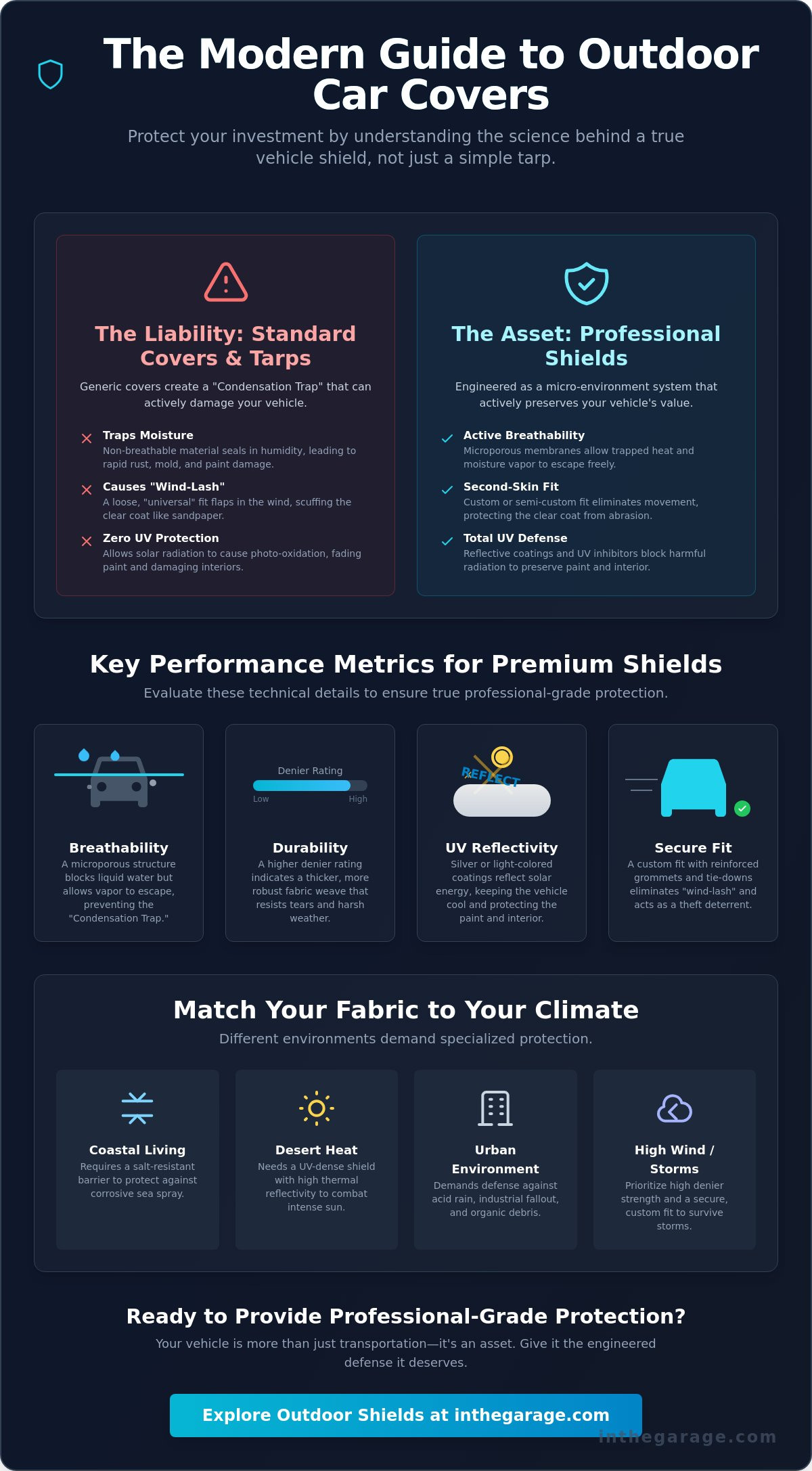
Una protezione professionale per esterni è molto più di una barriera fisica; è uno strumento specializzato progettato per regolare l'ambiente intorno al tuo veicolo. Coperture generiche antipolvere o teloni da ferramenta spesso falliscono perché mancano della scienza dei materiali sofisticata necessaria per gestire gli stress esterni proteggendo il delicato trasparente. Le coperture per auto da esterno ad alte prestazioni devono bilanciare una difesa robusta con una traspirabilità attiva per garantire una conservazione a lungo termine. Senza questo equilibrio, una copertura può rapidamente diventare un problema anziché un vantaggio.
Il fraintendimento più pericoloso nella conservazione dei veicoli è la "Trappola della Condensa". Quando una copertura è impermeabile al 100% ma priva di traspirabilità, sigilla l'umidità che sale dal terreno o si raffredda dal motore. Quest'aria carica di umidità rimane intrappolata contro la vernice. Col tempo, questo ciclo di riscaldamento e raffreddamento porta a ossidazione, muffa e opacità bianca nel trasparente che spesso richiede una correzione professionale per essere risolta. La vera protezione richiede un sistema che permetta a questo vapore di uscire prima che si depositi.
Oltre all'umidità, la tua vernice è costantemente bombardata dalle radiazioni UV-A e UV-B. Queste lunghezze d'onda non solo scoloriscono gli interni; innescano una degradazione chimica dei polimeri nella vernice. Comprendere la scienza della foto-ossidazione rivela come l'energia solare combinata con l'ossigeno degradi l'integrità superficiale a livello molecolare. Le coperture per auto da esterno professionali proteggono anche da minacce secondarie come pioggia acida, ricadute industriali e detriti organici che possono incidere la superficie se lasciati esposti anche solo per pochi giorni.
Traspirabilità vs Impermeabilità: Il Grande Paradosso
Per ottenere una protezione totale è necessario un materiale che blocchi l'acqua liquida mantenendo però la permeabilità al vapore. Le membrane di alta qualità utilizzano strutture microporose con aperture abbastanza piccole da respingere le gocce d'acqua ma abbastanza grandi da permettere alle molecole di umidità di uscire. È un delicato equilibrio tra resistenza all'acqua e scambio d'aria. La colonna idrostatica misura quanta pressione dell'acqua un tessuto può sopportare prima di perdere tenuta. Una copertura professionale mantiene un alto valore di colonna idrostatica senza sacrificare la circolazione d'aria necessaria per mantenere il veicolo asciutto e fresco.
Perché la "Vestibilità Universale" è una Minaccia per la Tua Vernice
La fisica impone che qualsiasi tessuto allentato si muova quando colpito dal vento. In uno scenario di adattamento universale, il materiale in eccesso agisce come una vela, creando un movimento continuo di sbattimento. Questo sfregamento da vento trasforma la copertura in una carta abrasiva a grana grossa, graffiando la vernice trasparente e opacizzando la brillantezza. Contorni personalizzati e tasche dedicate per gli specchietti offrono la stabilità necessaria per eliminare questo attrito. Inoltre, le coperture allentate creano tasche dove si accumulano polvere e granelli. Una volta intrappolate, queste particelle vengono incise nella vernice dal movimento del tessuto indotto dal vento, causando micrograffi visibili alla luce diretta del sole.
Parametri chiave di prestazione per coperture outdoor premium
Scegliere la difesa giusta per il proprio veicolo richiede di andare oltre il gergo pubblicitario per valutare i parametri tecnici che contano davvero. Le coperture auto da esterno di fascia alta si distinguono per la durabilità del materiale, misurata principalmente attraverso la densità del filo (denier) e la resistenza allo strappo. Un denier più alto indica una trama del filo più spessa e robusta, essenziale per resistere a scenari di vento forte dove tessuti inferiori si strapperebbero. Oltre al guscio esterno, la tecnologia della fodera deve prevedere uno strato interno non abrasivo, come pile o polimeri morbidi, per garantire che anche le particelle microscopiche di polvere non rovinino la finitura durante l'installazione.
La sicurezza è altrettanto vitale per la conservazione a lungo termine all'aperto. Le coperture premium includono occhielli rinforzati integrati e sistemi di fissaggio robusti che mantengono il tessuto teso contro la carrozzeria. Queste caratteristiche hanno una doppia funzione: prevengono l'attrito causato dal vento di cui si è parlato prima e fungono da deterrente contro i furti. Quando una copertura si adatta con precisione ed è fissata saldamente, rappresenta un ostacolo significativo per manomissioni opportunistiche. Per chi cerca questo livello di sicurezza senza compromessi, esplorare una Outdoor Shield - Car professionale offre l'affidabilità robusta di cui il vostro veicolo ha bisogno.
Resistenza ai raggi UV e riflettività solare
L'energia solare rappresenta una minaccia costante per la longevità automobilistica. I polimeri di alta qualità sono trattati con inibitori UV per evitare che il tessuto diventi fragile e si crepi sotto l'esposizione continua. I rivestimenti argentati o di colore chiaro svolgono un ruolo fondamentale, riflettendo l'energia termica lontano dal veicolo. Questa riflettività si traduce direttamente in temperature più basse all'interno dell'abitacolo, proteggendo la pelle delicata, prevenendo la deformazione del cruscotto e prolungando la vita delle guarnizioni in gomma delle porte e delle finiture in plastica che altrimenti si seccano e si deteriorano prematuramente.
Gestione della pressione idrostatica e del deflusso
La costruzione multistrato è progettata per far scivolare immediatamente l'acqua liquida, ma l'esecuzione delle cuciture è dove la maggior parte delle coperture fallisce. Le protezioni professionali utilizzano cuciture rinforzate e sigillature specializzate per impedire all'acqua di filtrare attraverso i fori degli aghi. Questo è particolarmente importante considerando l'EPA sugli effetti della pioggia acida, che evidenzia come la deposizione chimica possa corrodere il metallo e deteriorare le finiture della vernice se l'umidità viene lasciata stagnare. Le membrane veramente impermeabili devono includere porte di ventilazione attive per evitare che l'aria interna ristagni e causi i problemi di condensa menzionati in precedenza. Questa combinazione di alta resistenza alla pressione idrostatica e flusso d'aria strategico garantisce che le coperture per auto da esterno rimangano un rifugio sicuro per il tuo veicolo anziché una trappola per l'umidità.
Su misura vs. semi-su misura: orientarsi tra i livelli di protezione
Le coperture generiche sono spesso pubblicizzate come "taglia unica per la maggior parte", ma per la cura professionale del veicolo questo di solito significa "taglia unica per nessuno". Quando si valutano coperture professionali per auto da esterno, la scelta tra un telo generico e una protezione su misura è una scelta tra una copertura di base e una sicurezza totale. Una protezione su misura è uno strumento progettato con precisione per un anno modello e uno stile di carrozzeria specifici. L'integrità strutturale della tua protezione dipende da come il tessuto interagisce con i contorni del veicolo. Solo una soluzione su misura elimina completamente il fattore "Wind-Lash". Questo fenomeno si verifica quando il tessuto in eccesso si gonfia durante una tempesta, sbattendo contro la vernice trasparente come una carta vetrata ad alta velocità. Eliminando il tessuto in eccesso, elimini il rischio.
Considera l'aspetto economico della tua scelta. Una protezione ingegnerizzata su misura è un investimento controllato; una riverniciatura completa o una correzione della vernice dopo una stagione di trascuratezza ambientale è una spesa reattiva che spesso supera i 3.000 dollari. La National Highway Traffic Safety Administration (NHTSA) fornisce dati sui danni ambientali ai componenti del veicolo, confermando che l'esposizione ai raggi UV e il calore sono le principali cause del deterioramento dei materiali. Proteggere la vernice è solo una parte dell'equazione; proteggere il valore di rivendita complessivo del veicolo è l'obiettivo finale.
Un'obiezione comune è che una copertura su misura sia troppo difficile da installare da soli. È vero il contrario. Le tasche personalizzate per specchietti e antenne fungono da punti di ancoraggio logici, permettendo al tessuto di posizionarsi senza la lotta necessaria con un telo generico. Una volta allineate le tasche, il resto della copertura segue naturalmente le linee della carrozzeria, rendendo il processo efficiente per una sola persona. Il design di precisione garantisce che il tessuto rimanga al suo posto, offrendo una vestibilità come una seconda pelle, funzionale ed esteticamente gradevole.
L'ingegneria di una vestibilità professionale
Gli orli elasticizzati forniscono la tensione necessaria per mantenere la copertura sicura durante eventi di vento forte. Questi sono spesso completati da cinghie sotto la carrozzeria che assicurano che la protezione rimanga ancorata anche durante raffiche severe. Le tasche per specchietti e antenne non sono solo estetiche; sono fondamentali per mantenere l'allineamento della copertura e prevenire lo spostamento del tessuto. I modelli su misura accolgono modifiche specifiche come spoiler, portapacchi o kit carrozzeria allargati, garantendo che nessuna area rimanga vulnerabile agli agenti atmosferici.
Conservazione a lungo termine vs. uso quotidiano
Scegliere tra coperture per auto da esterno ad alte prestazioni per l'uso quotidiano o per la conservazione a lungo termine implica valutare il peso e la densità del materiale. Chi usa l'auto quotidianamente beneficia di tessuti leggeri e resistenti, facili da piegare e riporre nel bagagliaio. La conservazione stagionale richiede un numero di denari più elevato per offrire la massima difesa contro le minacce ambientali statiche. Se il tuo veicolo viene trasferito in un ambiente climatizzato, puoi esplorare Mantenere la lucentezza da esposizione: essenziali per la conservazione al chiuso per una cura più specializzata. Indipendentemente dall'uso, mantenere la copertura pulita e asciutta è essenziale per prevenire la formazione di muffa e mantenere la traspirabilità del tessuto.
Difesa ambientale: scegliere in base al tuo clima specifico
Una protezione efficace richiede una strategia adattata alla tua realtà geografica. Una soluzione unica non si adatta a ogni ambiente. Nelle regioni costiere, il principale nemico è l'aria carica di sale. Questa nebbia corrosiva penetra nei tessuti di bassa qualità, accelerando la ruggine sui metalli esposti e la corrosione delle finiture cromate. Le coperture per auto da esterno di alta qualità progettate per queste zone utilizzano strati esterni specializzati non porosi che fungono da barriera totale al sale. Al contrario, i climi desertici richiedono la massima dissipazione del calore e riflettività solare. Senza una superficie ad alte prestazioni, l'area sotto la copertura può diventare un forno, cuocendo la vernice trasparente e invecchiando prematuramente le plastiche interne.
Le zone invernali presentano una sfida unica nota come "congelamento". Questo si verifica quando l'umidità residua intrappolata sotto una copertura si ghiaccia, legando efficacemente il tessuto alla vernice del veicolo. Tentare di rimuovere una copertura congelata può causare danni significativi alla superficie, inclusa la desquamazione della vernice trasparente. Per prevenire ciò, le protezioni professionali incorporano una tecnologia avanzata di assorbimento dell'umidità che garantisce che la superficie rimanga asciutta anche quando le temperature scendono sotto lo zero. Nelle zone soggette a tempeste, la priorità si sposta sulla protezione dagli impatti. La costruzione multistrato offre una difesa ammortizzata contro la grandine e i detriti organici cadenti, preservando la carrozzeria durante eventi meteorologici severi che altrimenti lascerebbero ammaccature permanenti.
Il Problema dei Roditori nello Stoccaggio all'Aperto
Lo stoccaggio all'aperto spesso attira ospiti indesiderati. Topi e ratti vedono un veicolo coperto come un rifugio sicuro per nidificare, specialmente nei mesi più freddi. Una volta che accedono al telaio, possono causare danni per migliaia di euro rosicchiando cablaggi complessi e isolamenti. Le protezioni di qualità professionale contrastano questo problema con basi pesate e bordi sigillati con precisione che eliminano i punti di ingresso. Imparare come prevenire che i topi mangino i fili dell'auto durante lo stoccaggio è una componente fondamentale di un piano di protezione completo. Eliminando le fessure d'ingresso per i parassiti, proteggi i complessi sistemi elettrici e l'integrità meccanica del tuo veicolo.
Versatilità Tutto Tempo: L'Obiettivo 4 Stagioni
Una vera protezione per 4 stagioni deve funzionare su un ampio spettro di temperature. Deve rimanere flessibile e resistente alle crepe a -20°F mentre riflette il sole intenso a 100°F. La resistenza a muffa e funghi è inoltre imprescindibile, soprattutto durante stagioni piovose prolungate in cui l'umidità stagnante può rovinare la finitura. La sicurezza durante allerte di vento forte è garantita da sistemi di ancoraggio robusti e occhielli rinforzati che mantengono la copertura saldamente fissata. Per una soluzione che offre questo livello di prestazioni testate in ogni condizione atmosferica, l'Outdoor Shield - Car è la scelta definitiva per il proprietario esigente.
La Soluzione In The Garage: Perché l'Outdoor Shield è la Scelta Ultima
La conservazione professionale del veicolo è un impegno che richiede attrezzature specializzate. In The Garage non produciamo solo barriere in tessuto; progettiamo sistemi di gestione del micro-ambiente. Il nostro Outdoor Shield - Car è la scelta definitiva per la protezione del vialetto, offrendo un equilibrio sofisticato tra traspirabilità e difesa robusta. Non è un accessorio generico. È una soluzione "Premium Guardian" sviluppata da appassionati che comprendono che il tuo veicolo è un bene finanziario ed emotivo importante. Diamo priorità a un design meticoloso per garantire che la tua proprietà rimanga in condizioni da esposizione indipendentemente dalla volatilità esterna.
Questo impegno verso la scienza dei materiali ad alte prestazioni e il design personalizzato si estende oltre la cura automobilistica nel mondo dell'atletica professionale; per chi apprezza la qualità in ogni scelta di equipaggiamento, dai un'occhiata a sUperstar per approfondimenti sull'abbigliamento tecnico specializzato.
Per i proprietari che richiedono il massimo livello di sicurezza senza compromessi, l'Ultimate Shield - Car rappresenta l'apice della nostra ingegneria. Questa copertura è progettata per ambienti estremi dove le comuni coperture auto da esterno falliscono. Utilizza la nostra tecnologia multistrato più avanzata per offrire una protezione totale dagli agenti atmosferici mantenendo un flusso d'aria attivo. Che tu debba affrontare radiazioni solari intense o detriti di tempeste severe, questa è la scelta comprovata per chi non accetta nulla di meno della completa tranquillità. La nostra filosofia si basa sull'affidabilità a lungo termine e sulla convinzione che la protezione non debba mai compromettere l'estetica.
Oltre il tessuto: il vantaggio definitivo della copertura
La forza delle nostre coperture risiede nei dettagli che gli altri trascurano. La nostra costruzione multistrato è specificamente calibrata per prevenire trappole di umidità e accumulo di calore, come discusso nelle sezioni precedenti. Ogni componente è testato per l'affidabilità a lungo termine. Ci concentriamo sulla durata dei nostri accessori per garantire che la tua protezione rimanga sicura anche nelle condizioni più impegnative.
- Cinghie resistenti e fibbie antiurto che non cedono sotto tensione.
- Occhielli rinforzati e non graffianti per fissaggi sicuri e prevenzione dei furti.
- Fodere interne specializzate che trattano la vernice delicata con il rispetto che merita.
È questa dedizione alla qualità che rende i nostri prodotti lo standard di fiducia per collezionisti e appassionati in tutto il mondo. Mentre i concorrenti si concentrano sulla comodità universale, noi ci concentriamo sulle esigenze specifiche dei beni di alto valore.
Pronto a proteggere il tuo bene?
Raggiungere la vestibilità perfetta come una seconda pelle inizia con misurazioni accurate. Forniamo indicazioni chiare per garantire che la tua copertura si adatti perfettamente ai contorni specifici del tuo veicolo, comprese eventuali modifiche aftermarket. Ogni acquisto è garantito dalla nostra garanzia "Premium Reassurance", che riflette la nostra fiducia nella durata e nelle prestazioni dei nostri materiali. Questo non è solo un acquisto; è un investimento strategico nel valore di rivendita futuro e nell'integrità strutturale del tuo veicolo. Non lasciare il tuo investimento vulnerabile al deterioramento ambientale. Fai il passo definitivo nella conservazione del veicolo e Acquista la Collezione Outdoor Shield per assicurarti oggi la protezione che il tuo bene merita.
Proteggi la tua eredità automobilistica con una difesa professionale
Scegliere la difesa giusta per il tuo veicolo è una decisione strategica che influisce sul suo valore di rivendita a lungo termine e sull’integrità strutturale. Hai imparato che una conservazione efficace richiede più di una semplice barriera; richiede un sistema sofisticato di gestione del microambiente. Prioritizzando la traspirabilità attiva per prevenire la "trappola della condensa" e insistendo su una vestibilità di precisione per eliminare l’attrito causato dal vento, garantisci che la tua vernice trasparente rimanga impeccabile. Questi standard tecnici rappresentano la differenza definitiva tra un telo temporaneo e coperture professionali per auto da esterno.
Con oltre 30 anni di esperienza nel settore, In The Garage offre l’affidabilità robusta che gli appassionati di auto di tutto il mondo hanno imparato a fidarsi. I nostri prodotti sono progettati per una difesa ambientale estrema, garantendo che la tua proprietà sia testata e provata contro i climi più severi. È tempo di andare oltre le opzioni generiche e investire in una soluzione che si adatti come una seconda pelle. Proteggi il tuo investimento oggi stesso.
Proteggi il tuo veicolo con la massima protezione da esterno e vivi la tranquillità che deriva da una qualità senza compromessi. Il tuo veicolo merita un guardiano appassionato quanto te della sua conservazione.
Domande Frequenti
Una copertura per auto da esterno può graffiare la mia vernice?
Il danno alla vernice è possibile se una copertura non si adatta bene o viene applicata su una superficie sporca. Le particelle di sporco intrappolate contro la finitura agiscono come abrasivi quando il tessuto si muove. Per evitarlo, assicurati sempre che il veicolo sia pulito e scegli una protezione su misura con una fodera non abrasiva. Una vestibilità precisa elimina l’attrito causato dal vento che provoca graffi e opacizzazione della vernice trasparente.
È meglio lasciare un’auto scoperta o usare una copertura economica?
Lasciare un veicolo esposto è spesso preferibile all’uso di una copertura di bassa qualità e non traspirante. I materiali economici agiscono come trappole per l’umidità, sigillando l’umidità contro il metallo e accelerando la formazione di ruggine o il deterioramento della vernice trasparente. Se una protezione di qualità professionale non è un’opzione, il rischio di condensa intrappolata spesso supera il beneficio di una semplice barriera contro la polvere. Le coperture per auto da esterno di alta qualità sono l’unico modo sicuro per garantire una difesa ambientale totale.
Come posso evitare che la copertura della mia auto voli via con venti forti?
Fissa la tua protezione utilizzando occhielli rinforzati e sistemi integrati di ancoraggio. Le coperture professionali per auto da esterno sono progettate con orli elasticizzati che aderiscono alla parte inferiore del veicolo per garantire una vestibilità stabile. Per condizioni meteorologiche estreme, usa cinghie e fibbie resistenti per mantenere il tessuto teso contro la carrozzeria. Una vestibilità su misura è la migliore difesa, poiché non lascia materiale in eccesso che il vento possa prendere come una vela.
Le coperture impermeabili per auto sono davvero traspiranti?
Le coperture veramente professionali utilizzano membrane microporose che sono sia impermeabili che traspiranti. Questi strati specializzati presentano pori abbastanza piccoli da bloccare le gocce d'acqua liquide ma abbastanza grandi da permettere la fuoriuscita del vapore acqueo. Questo previene la stagnazione dell'aria sotto il tessuto che causa muffa. Verifica sempre che la tua copertura includa aperture di ventilazione attive per mantenere un microambiente stabile durante la conservazione a lungo termine.
Come pulisco e mantengo la mia copertura per auto da esterno?
Pulisci la tua copertura a mano usando una spazzola morbida e un detergente delicato e neutro dal punto di vista del pH mentre è stesa sul veicolo. Risciacqua accuratamente il tessuto con un tubo a bassa pressione e lascialo asciugare completamente all'aria prima di piegarlo. Non usare mai una lavatrice o un'asciugatrice commerciale, poiché l'agitazione e il calore possono distruggere gli inibitori UV critici e i rivestimenti impermeabili che proteggono il tuo veicolo.
Devo coprire la mia auto se è bagnata o sporca?
Non si dovrebbe mai applicare una copertura su un veicolo bagnato o sporco. Coprire un'auto sporca fa sì che i contaminanti si incastrino nella vernice, mentre coprire un'auto bagnata intrappola l'umidità che può portare a muffa e opacità della vernice. Una superficie pulita e asciutta è un requisito imprescindibile per una conservazione sicura. Effettuare una rapida pulizia prima di applicare la copertura è essenziale per preservare il valore di rivendita.
Quanto durano le coperture professionali per auto da esterno?
Una protezione esterna di alta qualità generalmente offre da tre a cinque anni di servizio affidabile in condizioni ambientali normali. Questa durata dipende dall'intensità dell'esposizione ai raggi UV e da quanto bene il materiale viene mantenuto attraverso una pulizia regolare. Le coperture con un grado di denier più elevato e trattamenti polimerici superiori resistono a diventare fragili e mantengono la loro resistenza allo strappo molto più a lungo rispetto alle alternative economiche e universali.
Una copertura per auto può proteggere dai danni della grandine?
Le coperture pesanti e multistrato offrono uno strato critico di protezione dagli urti contro la grandine e i detriti cadenti. Sebbene nessun tessuto possa prevenire i danni causati da grandine estrema e di grandi dimensioni, uno scudo imbottito assorbe una significativa energia cinetica. Questo effetto ammortizzante spesso previene le piccole ammaccature e le fratture superficiali che si verificano durante le tempeste estive standard. Fornisce un'affidabilità robusta che i teli generici a strato singolo non possono eguagliare durante eventi meteorologici severi.