


That premium motorcycle cover for winter you just purchased might be doing more harm than good. While a standard fabric layer seems like a logical shield, it often acts as a greenhouse for moisture, trapping humidity against your bike's most sensitive components. You've likely felt that familiar anxiety when peeling back a traditional cover only to discover new oxidation on the chrome or a fine layer of abrasive dust. It's a frustrating reality for enthusiasts who value their machinery, but there is a superior path.
You'll discover how active preservation through inflatable technology eliminates these risks entirely. By utilizing a continuous airflow system that never touches the fairings, you can prevent micro-scratches and electrical corrosion. We will explore the science behind these active covers and how they provide the ultimate environmental defense, ensuring your motorcycle looks exactly as it did the day you put it away.
Key Takeaways
- Identify how traditional fabric covers create a damaging "greenhouse effect" that traps moisture and accelerates chrome oxidation.
- Learn why an inflatable, active motorcycle cover for winter is the definitive solution for maintaining a moisture-free, showroom-ready finish.
- Discover the "no-touch" advantage of active systems that protect your fairings from the micro-scratches common with standard storage methods.
- Master a comprehensive winterization roadmap that combines deep cleaning with advanced airflow technology for total off-season peace of mind.
The Hidden Dangers of Traditional Winter Motorcycle Covers
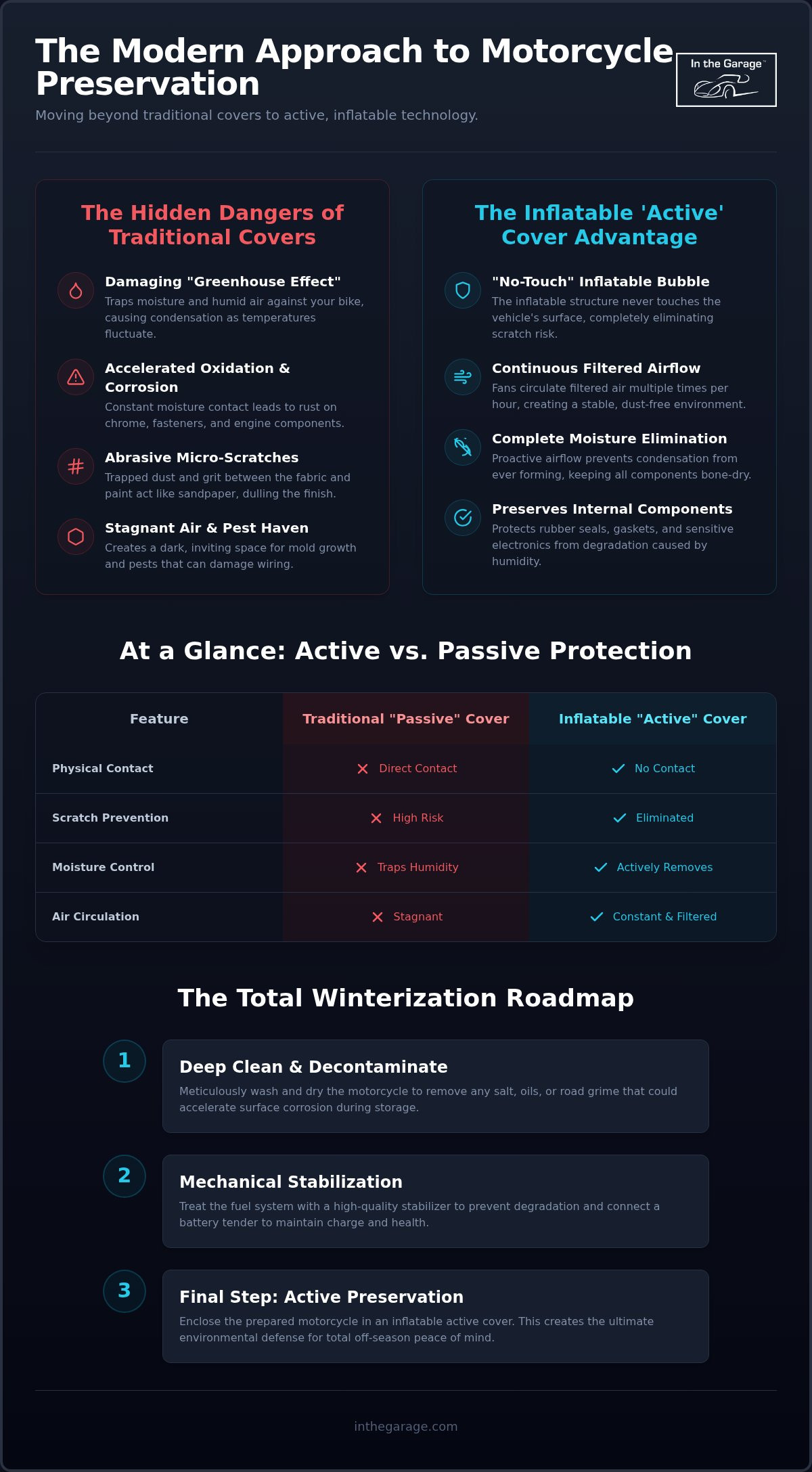
Traditional covers often do more harm than good. A standard motorcycle cover for winter is usually a passive barrier that rests directly on the bike's surface. When temperatures fluctuate in a garage, the air trapped beneath the fabric reaches its dew point, causing condensation to form on cold metal. This moisture has nowhere to go. It sits on your chrome and engine casings, creating a greenhouse effect that accelerates oxidation and corrosion. Passive protection simply isn't enough in unheated spaces where humidity remains high.
Beyond chemical reactions, physical contact poses a significant risk. Traditional covers trap dust and grit between the fabric and the paintwork. As the cover shifts due to air currents or handling, these particles act like sandpaper, leaving a network of micro-scratches on your fairings. This is a far cry from the standards discussed in The Science of Vehicle Preservation, which prioritizes maintaining the original finish without abrasive contact. Your bike deserves a guardian, not a shroud that degrades its value.
Heavy tarps also create dark, stagnant environments. These are ideal breeding grounds for mold and provide a perfect sanctuary for pests seeking warmth. Selecting a standard motorcycle cover for winter often invites rodents to nest under the heavy fabric; they can chew through wiring harnesses before you even realize they've moved in. Relying on a heavy, static layer is a gamble with your investment's electrical and aesthetic integrity.
Why Condensation is Your Bike's Biggest Winter Enemy
Condensation occurs when warm, moist air meets the cold steel of your frame, instantly turning into liquid water. Many breathable fabrics fail during rapid temperature drops because they can't move moisture out fast enough. For a deeper look at these technical challenges, explore The Science of Condensation. True preservation requires a system that manages the environment, not just one that hides the bike from view.
Active vs. Passive: Choosing an Inflatable Motorcycle Shield
Passive protection relies on a static layer of fabric. An active motorcycle cover for winter, however, utilizes an inflatable system to create a pressurized, protective bubble. This isn't just a storage bag; it's a dynamic environment. By surrounding your bike with a continuous stream of filtered air, you eliminate the threat of stagnant humidity. This proactive approach ensures that the atmosphere inside the shield remains stable, regardless of the conditions in your garage.
The most significant advantage is the "no-touch" architecture. Traditional heavy-duty polyester covers rest directly on your fairings, but an inflatable shield stands independent of the vehicle's surface. This ensures that no material ever rubs against your paintwork or chrome, effectively removing the risk of micro-scratches. While a standard motorcycle cover for winter often fades, tears, or loses its coating over time, these active systems are built for long-term durability and consistent performance.
Beyond surface aesthetics, this controlled micro-environment is essential for internal health. Stagnant air often leads to the degradation of rubber seals and sensitive electrical components. By maintaining constant circulation, you preserve the elasticity of gaskets and prevent the "sweating" that causes electrical corrosion. For those seeking the highest level of care, exploring our premium active storage solutions is the logical next step.
The Mechanics of an Inflatable Active Cover
The effectiveness of an active cover for 2026 storage depends on high-quality fans and heavy-duty filters. These components work in tandem to swap the air inside the bubble several times per hour, ensuring a dust-free and moisture-stable atmosphere. This process solves the "stagnant air" problem mentioned earlier, ensuring you don't have to worry about corrosion taking hold. You can view the full range of indoor and outdoor active shields in our collections to find the perfect fit for your specific machine.
The Total Winterization Roadmap for Premium Protection
Preparing a high-value asset for the off-season requires more than a simple wash. To achieve showroom-ready results next spring, you must follow a structured, professional-grade roadmap. Choosing a motorcycle cover for winter is the final step in a process that begins with mechanical and aesthetic preparation. This methodical approach ensures that your bike remains in a state of suspended animation, protected from the silent degradation of winter storage.
- Step 1: Deep Clean and Decontaminate. Meticulously wash and dry the motorcycle. Any salt, oils, or road grime sealed inside a storage unit will accelerate surface corrosion over time.
- Step 2: Mechanical Stabilization. Treat the fuel system with a high-quality stabilizer and connect a dedicated battery tender. These steps prevent internal gumming and ensure the electronics remain healthy.
- Step 3: Environmental Isolation. Position the bike within an active inflatable shield. This physically separates the machine from garage floor moisture and the surrounding environment.
- Step 4: Initiate the Preservation Cycle. Secure the unit and activate the airflow system. This starts the active exchange of air, creating a pressurized bubble of filtered protection.
By following these steps, you move beyond the limitations of a standard motorcycle cover for winter and embrace a system of total preservation. You can find the necessary hardware for this setup in our premium storage collections.
Setting Up Your Motorcycle Bubble for Success
Proper positioning is essential for long-term health. Use a center stand or paddock stands to lift the tires, which prevents flat spots during months of inactivity. Once the unit is running, periodically inspect the intake filters to ensure the active system maintains peak airflow. For more advanced setup techniques and insights into modern storage, refer to our Inflatable Garages Guide. Monitoring the unit ensures the micro-environment remains stable until your first ride of the spring.
Ensure a Showroom-Ready Start Next Spring
A motorcycle represents both a passion and a significant financial investment. Relying on a traditional motorcycle cover for winter often introduces risks like trapped moisture and micro-scratches that degrade a bike's value over time. By choosing an active, inflatable shield, you employ 30 years of automotive preservation expertise to safeguard your machine. The no-touch design ensures that fairings remain untouched by abrasive materials; meanwhile, active airflow technology, tested in extreme environments, prevents the silent threat of oxidation. You can now eliminate the anxiety of off-season storage by providing your bike with a premium, controlled micro-environment. Take the definitive step toward total protection today. Secure Your Asset with a Premium Active Motorcycle Shield and enjoy the peace of mind that comes with professional-grade care. Your next ride is waiting.
Frequently Asked Questions
Is an inflatable motorcycle cover better than a heated garage for winter?
An active system often provides superior protection compared to a standard heated garage. While heat prevents freezing, it doesn't filter dust or manage the stagnant humidity that leads to corrosion. An inflatable motorcycle cover for winter creates a pressurized, filtered bubble that isolates your bike from garage pollutants and moisture. This ensures the environment remains stable regardless of how often the garage door opens.
Does an active motorcycle bubble use a lot of electricity during the winter?
These active systems are engineered for high efficiency and continuous operation. The high-quality fans used in an inflatable shield typically consume minimal power, often comparable to a standard household light bulb. You don't have to worry about a significant impact on your utility bill. It's a cost-effective way to maintain a showroom-ready finish throughout the entire off-season without expensive climate-control rentals.
Can I use an active motorcycle cover outdoors in the snow?
You can utilize specialized outdoor motorcycle bubbles specifically designed for harsh winter climates. These heavy-duty active covers are constructed from UV-rated, cold-crack resistant materials that can withstand snow loads and freezing rain. The continuous airflow prevents the heavy fabric from resting on the bike. This ensures that even in extreme weather, your paintwork remains isolated from the weight of accumulated snow and ice.
Will an inflatable cover prevent mice and pests from reaching my motorcycle?
An inflatable active cover provides an exceptional physical barrier against rodents and insects. Because the unit is fully sealed and pressurized, there are no gaps for mice to enter and chew on wiring harnesses or nest in the exhaust. This total isolation is a primary advantage over traditional covers that simply drape over the bike. Those standard options often provide a dark, sheltered home for pests.
Disclaimer
Please note some articles may have AI generated content