Mit dem Winter vor der Tür stellt sich für jeden Motorradbesitzer ohne Garage dieselbe Frage: Wie schütze ich mein Bike vor monatelangem Schnee, Eis und beißender Kälte? Die Lagerung im Freien bedeutet mehr als nur Trockenhalten; es ist ein Kampf gegen den unsichtbaren Feind Kondensation. Eine billige, nicht atmungsaktive Plane kann Feuchtigkeit einschließen und ein korrosives Mikroklima schaffen, das heimlich Ihren Chrom, Lack und Ihre Elektronik beschädigt.
Dieser Leitfaden geht über die veraltete „wasserdichte Plane“-Mentalität hinaus. Wir werden die Wissenschaft der Werterhaltung erkunden und aufzeigen, warum die Kontrolle des Umfelds um Ihr Motorrad der Schlüssel ist, damit es im Frühjahr in makellosem, fahrbereitem Zustand erscheint. Für 2026 bedeutet Motorradschutz nicht, das Wetter abzuhalten – sondern die Umgebung zu steuern.
##Inhaltsverzeichnis
-
Über die Wasserdichtigkeit hinaus: Die Wissenschaft der Winter-Motorradpflege
-
Wesentliche Merkmale für einen leistungsstarken Outdoor-Winterschutz
-
Die Wahl Ihres Schutzes: Traditionelle Abdeckungen vs. Outdoor-Lagerblasen
##Über die Wasserdichtigkeit hinaus: Die Wissenschaft der Winter-Motorradpflege
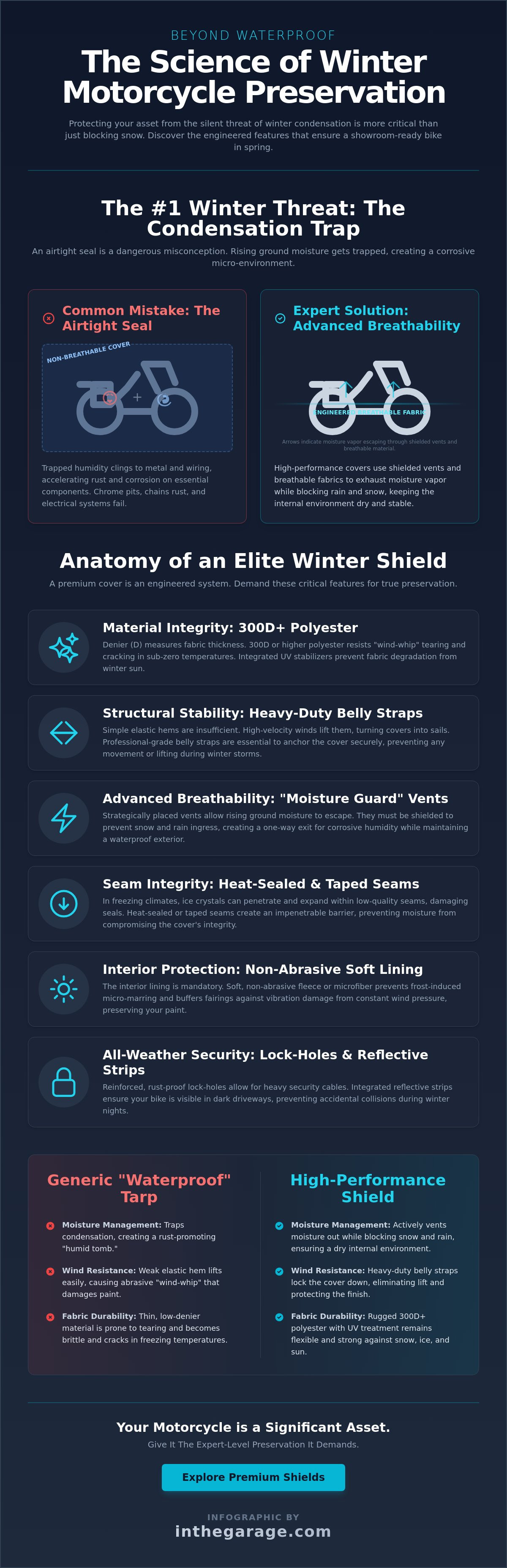
Viele Fahrer glauben, eine einfache „wasserdichte“ Abdeckung reiche für den Winter aus. Das ist ein gefährlicher Irrtum. Die größte Bedrohung für Ihr Motorrad bei der Lagerung im Freien ist nicht der fallende Schnee, sondern die aufsteigende Feuchtigkeit vom Boden. Wenn die Sonne die Abdeckung tagsüber erwärmt, verdunstet Feuchtigkeit vom feuchten Boden darunter, wird eingeschlossen und kondensiert nachts auf den kalten Metallflächen Ihres Motorrads, wenn die Temperaturen stark sinken.
-
Die Definition der „Kondensationsfalle“: Dieser Zyklus aus Verdunstung und Kondensation schafft ein feuchtes, korrosives Mikroklima unter der Abdeckung. Es ist ein Treibhauseffekt für Rost, der den Verfall von Metallteilen, elektrischen Verbindungen und sogar der Oberfläche Ihres Motorblocks beschleunigt.
-
Die Kraft der Atmungsaktivität: Wahre Atmungsaktivität bedeutet, dass ein Stoff Wasserdampf (Feuchtigkeit) entweichen lässt, während er äußere Flüssigkeiten (Regen und Schnee) blockiert. Dieser Einweg-Transfer ist der einzige Weg, die Kondensationsfalle zu überwinden.
-
Schutz für Ihren Lack: Während extremer Kälte kann eingeschlossene Feuchtigkeit Frost oder Eiskristalle auf der Innenseite der Abdeckung bilden. Ein weiches, nicht scheuerndes Innenfutter ist entscheidend, um zu verhindern, dass dieser Frost beim Bewegen der Abdeckung im Wind tausende Mikrokratzer im Lack und Klarlack verursacht.
Der Feuchtigkeits-Rost-Zyklus in unter Null Grad kalten Klimazonen
Die Physik von gefrierendem Wasser bringt ein weiteres Risiko mit sich. Wasser dehnt sich beim Gefrieren aus, was für die Integrität einer Motorradabdeckung katastrophal sein kann. Wassermoleküle können in die winzigen Nadelstiche minderwertiger Nähte eindringen. Wenn dieses Wasser über Nacht gefriert, dehnt es sich aus und verwandelt kleine Löcher in große Risse. Diese beschädigten Nähte lassen dann noch mehr Feuchtigkeit eindringen, was einen sich selbst verstärkenden Schadenzyklus erzeugt.
Deshalb verwenden professionelle Winterschutzabdeckungen wärmeversiegelte oder getapte Nähte. Diese Technologie schafft eine undurchdringliche Verbindung, eliminiert Nadelstiche vollständig und stellt sicher, dass die wasserdichte Barriere der Abdeckung während der Frost-Tau-Zyklen eines langen Winters intakt bleibt.
Materialintegrität: Warum 300D+ Polyester der Winterstandard ist
Der Stoff Ihrer Abdeckung ist die erste Verteidigungslinie. Der Begriff, den Sie kennen sollten, ist Denier (D), eine Maßeinheit für die Dicke und Dichte einzelner Fasern. Für harte Winterbedingungen ist eine Bewertung von 300D oder höher der professionelle Standard.
-
Widerstand gegen „Windpeitsche“: Leichtere Stoffe (unter 300D) schlagen bei starkem Wind heftig, ein Phänomen, das als „Windpeitsche“ bekannt ist. Dies beschädigt nicht nur den Lack Ihres Motorrads, sondern kann auch die Abdeckung selbst zerreißen oder zerstören. Ein robustes Polyester mit 300D+ hat das Gewicht und die Stärke, um dieser schädlichen Bewegung zu widerstehen.
-
Winter-UV-Schutz: Selbst schwache Wintersonne strahlt UV-Licht aus, das Stoffe mit der Zeit spröde machen kann. Hochwertige Outdoor-Abdeckungen sind mit UV-Stabilisatoren behandelt, die diese Abnutzung verhindern und sicherstellen, dass das Material nach monatelanger Einwirkung nicht brüchig und rissanfällig wird.
##Wesentliche Merkmale für einen leistungsstarken Outdoor-Winterschutz
Über die grundlegende Materialwissenschaft und Atmungsaktivität hinaus wird eine wirklich effektive Motorradabdeckung für die Winterlagerung im Freien durch ihre Eigenschaften definiert. Diese Komponenten sind darauf ausgelegt, den spezifischen Herausforderungen eines harten Winters zu begegnen, von Sturmwinden bis zu schweren Schneelasten.
-
Abgeschirmte Belüftungssysteme: Lüftungsöffnungen sind unverzichtbar, um den Luftstrom zu fördern und Feuchtigkeit abzuleiten. Allerdings sind einfache, offene Lüftungen im Winter ein Risiko. Achten Sie auf „Moisture Guard“-Lüftungen mit Hauben oder Abschirmungen, die Wasserdampf entweichen lassen, während sie verhindern, dass Schnee und Regen eindringen.
-
Robuste Bauchgurte: Ein einfacher elastischer Saum reicht nicht aus, um eine Abdeckung gegen starke Winterböen zu sichern. Ein robuster, verstellbarer Bauchgurt, der die Abdeckung unter dem Motor zusammenzieht, ist unerlässlich, um sie an Ort und Stelle zu halten und zu verhindern, dass sie bei einem Sturm abgerissen wird.
-
Hitzebeständige Einsätze: Nach Ihrer letzten Fahrt der Saison möchten Sie Ihr Motorrad abdecken können, ohne stundenlang warten zu müssen, bis die Auspuffrohre vollständig abgekühlt sind. Integrierte hitzebeständige Einsätze in den unteren Bereichen der Abdeckung ermöglichen es Ihnen, Ihr Motorrad schnell und sicher zu sichern.
Die innere Umgebung: Innenfutter und Lackschutz
Was Ihr Motorrad berührt, ist genauso wichtig wie das, was es vor den Elementen schützt. Das Innenfutter einer Winterabdeckung muss so konstruiert sein, dass es den Lack Ihres Motorrads vor den subtilen Schäden durch langfristige Lagerung bewahrt.
-
Schonende Materialien: Eine hochwertige Abdeckung verfügt über ein weiches, nicht abrasives Innenfutter, wie Fleece oder Mikrofaser. Diese sanfte Schicht schützt Ihre Verkleidungen, den Tank und die Windschutzscheibe vor den ständigen, subtilen Vibrationen und Bewegungen durch den Wind und verhindert das Mattwerden und Mikrokratzer im Lack.
-
Die richtige Passform finden: Eine präzise Passform ist der erste Schritt zum Lackschutz, da sie abrasive Bewegungen minimiert. Um einen Shield zu finden, der auf die spezifische Geometrie Ihres Motorrads zugeschnitten ist, können Sie das vollständige Sortiment an passgenauen Optionen in den In The Garage Kollektionen erkunden.
##Auswahl Ihres Shields: Traditionelle Abdeckungen vs. Outdoor Storage Bubbles
Für den ultimativen Schutz im Winter im Freien haben Enthusiasten zwei Hauptoptionen: eine leistungsstarke Stoffabdeckung wie den Outdoor Shield oder ein technologisch fortschrittliches aufblasbares System wie die Outdoor Motorcycle Bubble. Die beste Wahl hängt von Ihren spezifischen Sicherheitsanforderungen, dem Klima und den Erhaltungszielen ab. Für eine detaillierte Aufschlüsselung bietet unser Vergleich von Motorrad-Lagerbehältern eine ausführliche Analyse.
-
Der Outdoor Shield: Dies ist ein robustes, professionelles Gewebe-Schutzsystem. Es verwendet fortschrittliche, atmungsaktive Materialien und eine stabile Konstruktion, um aktiv Kondensation zu bekämpfen und Ihr Motorrad vor Schnee, Eis und Wind zu schützen. Es ist die endgültige Wahl für hochleistungsfähigen passiven Schutz.
-
Die Outdoor-Motorradblase: Dieses System stellt einen Paradigmenwechsel in der Fahrzeuglagerung dar. Es ist eine aktive Erhaltungsumgebung, die durch ständigen Luftstrom ein klimatisiertes Mikroklima schafft und vollständige Isolierung von der Außenwelt bietet.
-
Pflegehinweis: Beim Entfernen von schwerem Schnee von jeder Abdeckung verwenden Sie immer eine weiche Bürste oder einen Besen und schieben sanft. Verwenden Sie niemals eine Schaufel oder scharfe Gegenstände, die das Material durchstechen oder zerreißen könnten.
Die Outdoor-Motorradblase: Totale Isolierung
Die Outdoor-Blase ist mehr als nur eine Abdeckung; sie ist eine persönliche Garage. Ihre starre, aufgeblasene Struktur bildet eine berührungslose Barriere und schafft einen großzügigen Raum um das Motorrad. Dieses Design ist der Schlüssel zu ihrer Wirksamkeit, da es einen ständigen Strom gefilterter Luft ermöglicht, der Feuchtigkeit vollständig eliminiert und die Bildung von Kondensation verhindert.
-
Aktiver Luftaustausch: Ein Hochdrucklüfter läuft kontinuierlich und tauscht die Luft im Inneren der Blase 3-5 Mal pro Stunde aus. Dieser aktive Luftstrom hält Temperatur und Luftfeuchtigkeit konstant, stoppt den Feuchtigkeits-Rost-Zyklus, bevor er beginnen kann, und verhindert 100 % Kondensation.
-
Struktureller Schutz: Die aufgeblasene Form ist stabil genug, um schwere Schneelasten zu tragen und Ihr Motorrad vor herabfallenden Ästen, Hagel oder versehentlichen Stößen zu schützen – Gefahren, gegen die eine herkömmliche Stoffabdeckung nicht schützt. Mehr zu dieser Technologie finden Sie unter dem Aufstieg der aufblasbaren Garagen.
Wintervorbereitung Ihres Motorrads vor dem Abdecken
Selbst die beste Abdeckung der Welt wirkt effektiver, wenn das Motorrad selbst richtig auf die Winterpause vorbereitet ist. Bevor Sie Ihren Schutz für den Winter ausrollen, gehen Sie diese schnelle professionelle Checkliste durch:
-
Tank füllen und Stabilisator hinzufügen: Ein voller Tank verhindert, dass sich Feuchtigkeit an den Innenwänden absetzt, und ein Kraftstoffstabilisator verhindert, dass das Benzin sich zersetzt und das Kraftstoffsystem verklebt.
-
Schließen Sie ein Batterieladegerät an: Moderne Batterien können über einen langen, kalten Winter entladen werden. Ein intelligentes Ladegerät hält die Batterie auf optimalem Ladezustand und sorgt so für einen schnellen Start im Frühling.
-
Öl wechseln: Gebrauchte Öle enthalten Verunreinigungen, die im Laufe der Zeit Motorteile beschädigen können. Es ist eine bewährte Praxis, Ihr Motorrad mit frischem Öl einzulagern.
-
Reinigen und Schmieren: Waschen und wachsen Sie Ihr Motorrad gründlich, um den Lack zu schützen. Reinigen und schmieren Sie die Kette, um Rost zu verhindern.
-
Den Auspuff verschließen: Verwenden Sie Stahlwolle oder einen speziellen Auspuffstopfen, um zu verhindern, dass Nagetiere in Ihren Rohren nisten.
Mit Ihrem richtig vorbereiteten Motorrad sind Sie bereit, ihm den ultimativen Winterschutz zu bieten. Ihr Bike ist ein wertvolles Gut, und es mit professioneller Technologie zu schützen, ist die klügste Investition vor dem ersten Schneefall.
Bereit, Ihr Fahrzeug zu schützen? Entdecken Sie die Outdoor Shield- und Bubble-Serie für den ultimativen Winterschutz 2026.
##Häufig gestellte Fragen
Kann ich meine Motorradabdeckung den ganzen Winter über ohne Kontrolle drauflassen? Obwohl eine hochwertige Abdeckung für die Langzeitlagerung ausgelegt ist, ist es ratsam, Ihr Motorrad regelmäßig zu überprüfen, besonders nach starkem Schneefall oder starkem Wind. Stellen Sie sicher, dass die Abdeckung noch sicher sitzt, und entfernen Sie größere Schneemengen, um die Belastung von Stoff und Nähten zu verringern.
Verursacht eine wasserdichte Motorradabdeckung Rost an meinem Motorrad? Eine Abdeckung, die lediglich „wasserdicht“ aber nicht „atmungsaktiv“ ist, kann definitiv Rost verursachen. Sie hält Bodenfeuchtigkeit zurück und schafft ein feuchtes Umfeld, das Korrosion begünstigt. Eine atmungsaktive Abdeckung lässt diesen Feuchtigkeitsdampf entweichen, was für die Vermeidung von Rost bei der Winterlagerung im Freien unerlässlich ist.
Wie sichere ich meine Motorradabdeckung gegen starke Winterwinde? Die effektivste Methode ist die Verwendung einer Abdeckung mit einem eingebauten, robusten Bauchriemen, der unter dem Motorrad befestigt wird. Dies, kombiniert mit einem starken elastischen Saum, hält die Abdeckung fest an ihrem Platz. Vermeiden Sie es, sich nur auf einen elastischen Saum zu verlassen, da dieser bei starken Stürmen oft nicht ausreicht.
Sollte ich für die Außenlagerung eine Motorradblase oder eine herkömmliche Abdeckung verwenden? Eine hochwertige Stoffabdeckung (wie der Outdoor Shield) bietet in den meisten Situationen hervorragenden Schutz vor Witterungseinflüssen und Kondensation. Eine Motorradblase für den Außenbereich sorgt für vollständige Umweltdichtung, aktive Luftzirkulation zur Beseitigung aller Kondensation sowie strukturellen Schutz vor herabfallenden Gegenständen und Schneelast. Wenn Sie den absolut höchsten Erhaltungsgrad suchen, ist die Blase die beste Wahl.