


A traditional fabric car cover is often an aerodynamic liability when the weather turns aggressive. Most owners believe that extra straps and tighter cinches are the answer to a storm; yet, in high-velocity environments, these passive layers transform into abrasive sails that vibrate against your clear coat. If you have ever returned to your vehicle after a gale only to find a network of micro-scratches or a cover bundled in the neighbor's yard, you know the frustration of inadequate protection.
Finding a reliable car cover for windy conditions requires moving beyond the limitations of resting fabrics. We understand the deep emotional and financial value of your vehicle, which is why we advocate for a more sophisticated approach. You deserve a solution that offers total peace of mind without the constant maintenance of complex clip systems that inevitably fail. In this guide, we examine the physics of active protection. You will discover how inflatable systems create an immovable, aerodynamic anchor that shields your vehicle from gusts up to 80 MPH while ensuring the surface remains completely untouched. It is time to replace a failing tradition with engineered excellence.
Key Takeaways
- Understand why traditional fabric covers act like sails in high winds, causing dangerous lift and damaging surface abrasion.
- Discover the engineering behind an inflatable "active" cover, which uses structural rigidity to ensure the material never touches your vehicle's paint.
- Learn how to evaluate a car cover for windy conditions by focusing on heavy-duty polymer construction and base-layer integrity.
- Explore the specific benefits of the Outdoor Shield, designed with an active airflow system that prevents condensation while resisting gusts up to 80 MPH.
- Identify the "set it and forget it" advantages of active systems that provide premium reassurance without the hassle of failing strap and clip configurations.
The Failure of Traditional Car Covers in Windy Conditions
Traditional fabric covers are inherently passive. They rely on gravity and tension to stay in place. In a storm, this design philosophy collapses. Choosing a car cover for windy conditions often leads owners toward heavy-duty fabric options; however, weight alone cannot overcome physics. These covers are designed to rest directly on the paint, which creates a fundamental vulnerability when the air begins to move.
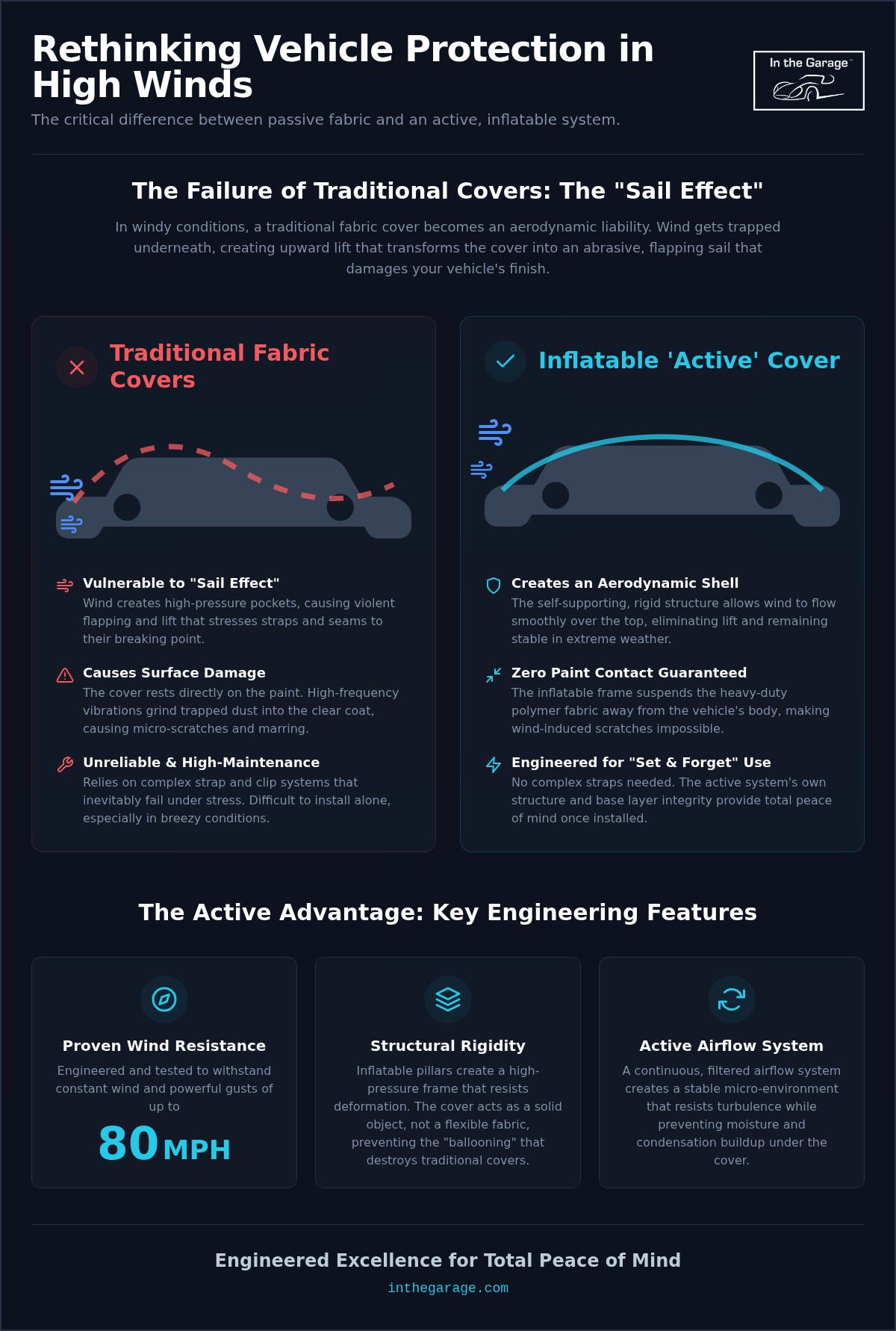
The science of automotive aerodynamics dictates how air flows over a vehicle's specific curves. When a loose fabric cover is added, it disrupts this flow. Wind finds its way underneath the hem, creating a high-pressure pocket that generates significant upward lift. This "Sail Effect" transforms your protection into a liability, pulling at the vehicle and stressing every attachment point.
Aerodynamic Instability and the Sail Effect
As air pressure builds internally, the cover balloons. This creates immense stress on grommets and plastic clips. While some manufacturers suggest using bungees or weighted edges, these are merely temporary fixes. They don't change the aerodynamic profile. Eventually, the mechanical tension exceeds the material's strength. This leads to torn seams or snapped straps, often leaving your vehicle completely exposed in the middle of a gale.
The Hidden Cost of Fabric Flapping
Surface protection is the primary goal, yet wind often turns the cover against the car. Even the softest fleece lining becomes a threat when it flaps at high frequency. Microscopic dust particles trapped between the fabric and the body act like sandpaper. Surface marring is the primary risk of using loose-fit covers in wind, as constant vibration grinds these particles into the clear coat. It's a silent form of damage that only becomes visible once the storm clears.
Beyond the physical damage, there's the sheer hassle of installation. Securing a traditional cover during a light breeze usually requires two people to prevent it from blowing away before the first strap is clicked. It's an exhausting, unreliable process that offers no guarantee of stability. For those who value their time and their vehicle's finish, these passive systems are no longer a viable option.
The Active Advantage: Defying Wind with Inflatable Technology
An active cover represents a paradigm shift in vehicle preservation. Unlike traditional products that rely on the car's body for support, an inflatable active system creates its own structural environment. This dynamic approach ensures the shield maintains its intended shape regardless of external atmospheric pressure. While a standard car cover for windy conditions often collapses under load, an active system uses constant air pressure to remain rigid and immovable.
The primary innovation lies in the transition from a passive fabric bag to an aerodynamic shell. This design is essential when facing high wind dangers that can easily displace or shred conventional materials. By utilizing a continuous airflow system, these shields create a stable micro-environment that resists the turbulence of a storm. They don't just sit on the car; they encapsulate it within a protective barrier that is tested and proven to maintain integrity.
Structural Rigidity vs. Wind Force
Traditional covers move with every gust because they lack internal support. In contrast, the inflatable pillars of the Showcase model create a high-pressure frame that resists deformation even in significant gales. This structural integrity prevents the "ballooning" effect described earlier. The shield acts as a solid object rather than a flexible sail, allowing wind to flow around the structure rather than under it. This rigidity provides the ultimate confidence during unpredictable weather events.
Eliminating Paint Contact Entirely
The most significant benefit of an active system is the total suspension of the cover away from the paintwork. Because the structure is self-supporting, the material never rests on the vehicle's surface. This design choice effectively eliminates the possibility of wind-induced scratches or surface marring. It's a premium solution for owners who refuse to compromise on their vehicle's finish. You can explore our range of active protection systems to see how this engineering provides a "set it and forget it" defense that traditional alternatives simply cannot match.
Choosing the Ultimate Shield for High-Wind Environments
Selecting a car cover for windy conditions requires a shift in perspective. You aren't just buying a layer of fabric; you're investing in a structural defense system. The Outdoor Shield is the definitive solution for driveway-based protection, utilizing heavy-duty polymer construction to maintain its form against aggressive weather. This material choice ensures that the base-layer integrity remains uncompromised, even when the environment becomes hostile.
Engineering an effective wind barrier involves more than just weight. Our active systems rely on sophisticated fluid dynamics, much like the aerodynamic principles of a golf ball, to manage air resistance and reduce drag. This specialized design allows the shield to remain stable while traditional covers are shredded by the same forces. For those seeking the absolute pinnacle of rugged defense, the Ultimate Shield provides an even more robust barrier, serving as a premium guardian for your most valued assets.
Outdoor Shield: The Professional Choice
The Outdoor Shield is specifically designed for enthusiasts who demand excellence. It features an active airflow system that maintains structural rigidity while preventing the internal condensation that plagues passive covers. We encourage you to browse our full range of outdoor car covers to find the specific configuration that matches your vehicle type and environmental needs.
Installation Best Practices for Maximum Stability
Securing an active system is a methodical process that guarantees long-term peace of mind. It's a "set it and forget it" solution that removes the stress of an impending storm. Follow this 3-step checklist for professional-grade stability:
- Position: Center your vehicle on the heavy-duty base mat to ensure an even distribution of the seal.
- Seal: Connect the active cover to the base layer using the integrated high-strength fasteners.
- Inflate: Activate the airflow system to achieve full structural rigidity, which suspends the material away from the paint.
This active airflow is critical. It creates a constant exchange of air that prevents moisture buildup during extended windy periods. For a broader look at how this technology is redefining vehicle care, explore our recent feature on The Rise of Inflatable Garages: A New Era of Vehicle Protection in 2026. By choosing an active system, you're embracing a future where wind is no longer a threat to your vehicle's perfection.
Secure Your Vehicle with Engineered Excellence
Traditional fabric covers often fail when you need them most. They turn into abrasive sails that compromise your vehicle's finish. By choosing an active inflatable system, you move beyond passive protection and embrace a solution that remains immovable in the face of a storm. These systems are tested for extreme environments and utilize active airflow technology to maintain structural integrity without ever touching your paint. It is the definitive choice for enthusiasts who prioritize uncompromising quality and peace of mind.
Finding a reliable car cover for windy conditions is no longer a matter of adding more straps; it's about shifting to an active defense. Our designs are trusted by high-end automotive enthusiasts who understand that true preservation requires innovation. Explore the Collection of Active Protection Shields to find the ultimate guardian for your driveway. Your vehicle is a significant asset that deserves the highest level of care. Take the first step toward total protection today.
Frequently Asked Questions
Will an inflatable car cover blow away in high winds?
An active system is designed to remain anchored even in severe weather. Unlike traditional options, an active car cover for windy conditions uses a heavy-duty base mat and high-pressure pillars to create an immovable shell. These systems are tested to withstand gusts up to 80 MPH. The structural weight of the vehicle parked on the base mat provides a natural anchor that prevents the shield from shifting during a storm.
How do active covers prevent wind from scratching my car paint?
Active covers eliminate surface abrasion by maintaining a physical gap between the material and the vehicle. Traditional covers rest directly on the paint; this allows wind to grind trapped dust into the clear coat. An active system is self-supporting. It stays suspended away from the bodywork. This ensures that even in high-velocity winds, there is no fabric movement against the paint to cause marring or scratches.
Can I use an active cover for outdoor storage during a storm?
The Outdoor Shield is specifically engineered for rugged, outdoor environments during inclement weather. It uses a heavy-duty polymer construction that resists UV degradation and impact from flying debris. While traditional covers often fail during a gale, this active system provides a reliable solution for driveway defense. It's an ideal choice for long-term storage when you need confidence that your vehicle remains shielded from the elements.
Do inflatable covers require constant power to stay stable in the wind?
Yes, the active airflow system requires a continuous power source to maintain its structural integrity and protective capabilities. This constant pressure is what keeps the shield rigid and prevents it from collapsing under wind load. Beyond stability, the airflow system performs the critical task of preventing moisture buildup and condensation. This ensures that the micro-environment around your car remains dry and stable regardless of external humidity or temperature shifts.
Disclaimer
Please note some articles may have AI generated content