


¿Y si el ambiente seguro que has seleccionado para tu vehículo es en realidad el principal catalizador de su degradación silenciosa? Para muchos propietarios, preparar un coche para almacenamiento de 6 meses se ve erróneamente como un evento pasivo en lugar de un proceso meticuloso de gestión ambiental. Probablemente compartas las ansiedades comunes del entusiasta moderno. Te preocupan los roedores que comprometen el cableado intrincado, los neumáticos que desarrollan puntos planos permanentes o una batería muerta que retrasa tu regreso a la carretera. Estos no son solo inconvenientes; son amenazas directas a una inversión financiera y emocional significativa.
Entendemos que tus estándares de preservación son intransigentes. Esta guía te capacita para dominar los protocolos profesionales requeridos para la estabilidad a largo plazo del vehículo y la total tranquilidad. Descubrirás cómo crear un microambiente controlado que garantice que tu coche se mantenga en condiciones de exhibición. Cubriremos todo, desde la estabilización avanzada de fluidos hasta el papel definitivo de recintos especializados como Ultimate Shield o sistemas Showcase. Al final de esta lista de verificación, tendrás la hoja de ruta comprobada para asegurar que tu vehículo arranque perfectamente y luzca impecable en el momento de tu regreso.
Puntos Clave
- Previene la erosión interna del motor comprendiendo la necesidad crítica de lubricantes frescos y técnicas modernas de estabilización de combustible antes de la estasis a largo plazo.
- Domina los estándares profesionales para preparar un coche para almacenamiento de 6 meses neutralizando residuos corrosivos y eliminando factores que atraen infestaciones de roedores.
- Identifica por qué las fundas tradicionales de tela a menudo fallan y cómo manejar el microambiente para evitar que la condensación alcance la superficie de tu vehículo.
- Ejecuta una línea de tiempo de almacenamiento de alta precisión que asegura que ningún detalle se pase por alto durante la última semana antes de que tu vehículo entre en estado de estasis.
- Explora los beneficios definitivos de los sistemas de protección inflables, como Ultimate Shield, que utilizan flujo de aire activo para mantener un ambiente prístino, casi hermético.
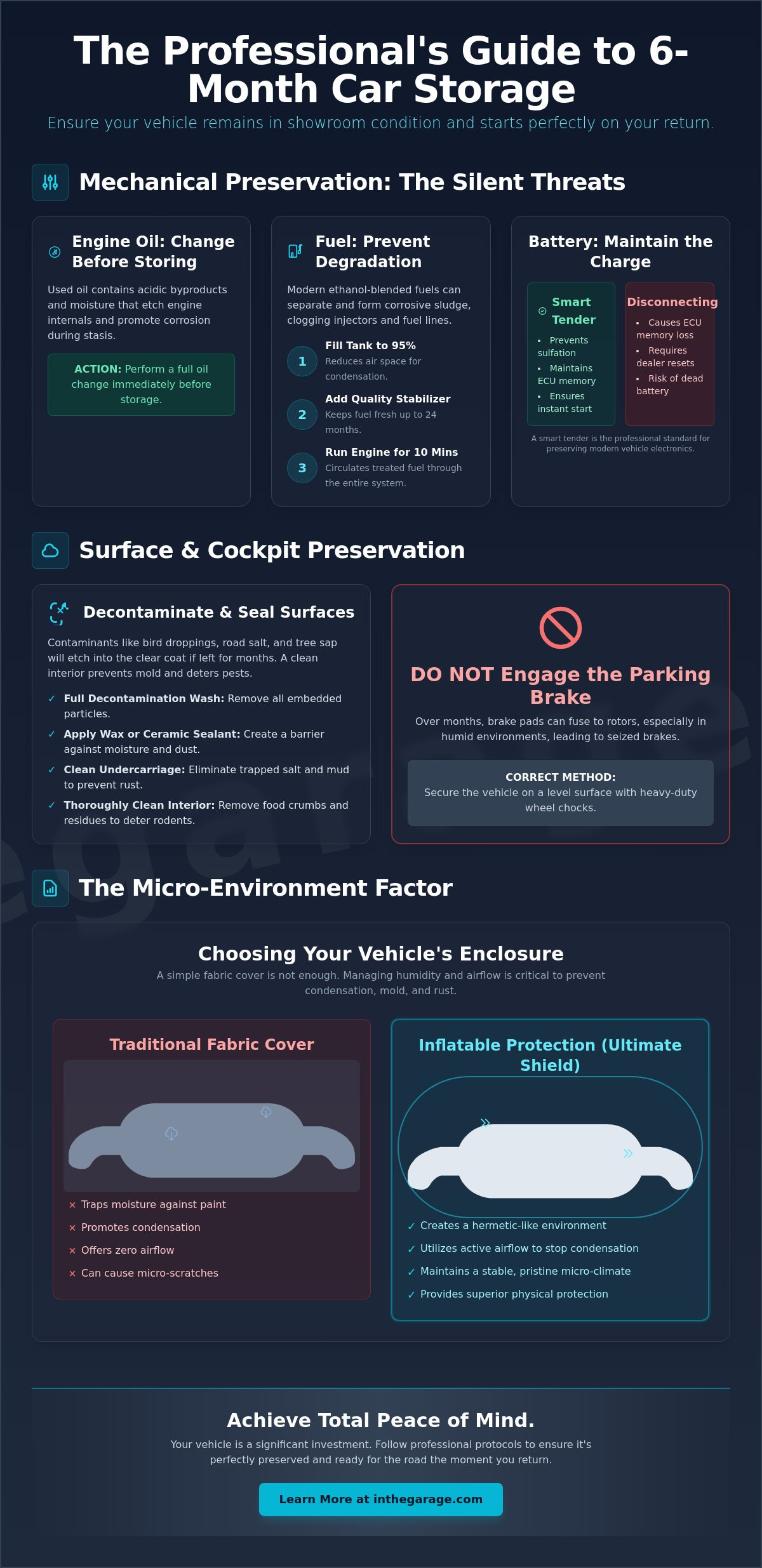
Preservación Mecánica: Mantenimiento de Fluidos y Batería
La degradación interna es un ladrón silencioso. Mientras el exterior de su vehículo permanece visible, los procesos químicos que ocurren dentro del motor y el sistema de combustible pueden causar daños irreversibles durante una pausa de medio año. Alcanzar estándares profesionales al preparar el auto para almacenamiento de 6 meses comienza con una estrategia integral de fluidos. Debe cambiar el aceite usado inmediatamente antes de estacionar. El aceite viejo contiene subproductos ácidos de la combustión y humedad. Si se deja estancado por meses, estos contaminantes pueden corroer las superficies de los cojinetes y promover la corrosión interna. Un lubricante nuevo proporciona un ambiente limpio y alcalino que neutraliza las amenazas químicas desde el primer día.
Los fluidos como el refrigerante y el líquido de frenos también requieren atención. El líquido de frenos es higroscópico, lo que significa que absorbe activamente la humedad del aire. En 180 días, esta agua acumulada puede causar óxido interno en las pinzas y el cilindro maestro. Asegúrese de que estos sistemas estén llenos y, si se acerca el intervalo de servicio, purgados antes de que el vehículo entre en su espacio protector. Este mantenimiento proactivo garantiza que la integridad mecánica de su inversión permanezca intacta.
La estrategia de combustible para 6 meses
La gasolina moderna es notoriamente inestable. Para 2026, las mezclas con etanol se han vuelto más complejas, aumentando el riesgo de separación de fases. Esto ocurre cuando la humedad en el tanque se une con el etanol, causando que se hunda al fondo como un lodo corrosivo. Para evitar esto, llene su tanque aproximadamente al 95% de su capacidad. Esto reduce el área interna donde puede formarse condensación. Añada un estabilizador de alta calidad como STA-BIL, que puede mantener el combustible fresco hasta por 24 meses. Haga funcionar el motor al menos diez minutos después de añadir el tratamiento. Este es un paso crítico al preparar el auto para almacenamiento de 6 meses porque asegura que el combustible estabilizado llegue a los rieles e inyectores, protegiendo todo el sistema de suministro de depósitos pegajosos.
Cargadores de batería vs. desconexión
La arquitectura eléctrica de un auto moderno es muy sensible a la pérdida de energía. Simplemente desconectar el terminal negativo a menudo resulta en "pérdida de memoria" para las Unidades de Control Electrónico (ECU), lo que requiere costosos reinicios en el concesionario para los puntos de cambio de transmisión o ajustes de ralentí. Un cargador inteligente de batería es la solución superior. Estos dispositivos monitorean el voltaje de la batería y proporcionan una carga precisa y de bajo amperaje solo cuando es necesario. Esto previene la sulfatación que destruye las baterías de plomo-ácido y AGM durante la inactividad. Al usar un cargador en un espacio cerrado, asegúrese de que el cargador esté certificado para ese ambiente y que la conexión sea segura para evitar riesgos de chispas. Este nivel de cuidado garantiza que su motor arranque instantáneamente a su regreso.
Detalle exterior e interior para estasis a largo plazo
La limpieza es un pilar fundamental de la preservación. Cuando preparas el coche para un almacenamiento de 6 meses, cualquier residuo dejado en la pintura o tapicería se transforma de una molestia menor en un defecto permanente. Contaminantes ambientales como excrementos de aves, savia de árboles y sal de carretera son químicamente agresivos. Durante 180 días de inactividad, estas sustancias grabarán profundamente el barniz, requiriendo a menudo corrección profesional de pintura para reparar. Un detallado exhaustivo y de alto nivel asegura que no estés sellando los mismos elementos que causan la degradación a largo plazo.
Los componentes mecánicos fuera del compartimento del motor también requieren atención. Una regla crítica es nunca accionar el freno de mano. Si se deja aplicado durante meses, las pastillas pueden unirse químicamente o "atascarse" con los discos o tambores, especialmente en ambientes de alta humedad. Esto resulta en un vehículo que se niega a moverse o que sufre de pulsaciones severas en los frenos al volver a usarse. Usa calzos pesados para ruedas sobre una superficie nivelada para asegurar el vehículo en su lugar.
Protección de la pintura y sellado de superficies
Un lavado de descontaminación es un paso crítico de preservación que utiliza agentes químicos y arcilla para eliminar partículas metálicas incrustadas y enlaces ambientales que los jabones estándar no pueden alcanzar. Una vez que la superficie está realmente limpia, aplica una cera de alta calidad o un sellador cerámico. Esto actúa como una barrera sacrificial contra la humedad ambiental y el polvo. No descuides el chasis y los pasos de rueda. Usa una hidrolavadora para eliminar barro y depósitos de sal ocultos que atrapan humedad contra el chasis, ya que estos son los puntos principales donde comienza la oxidación durante el almacenamiento.
Preservación del habitáculo y control de olores
El interior de tu vehículo es un santuario que requiere aislamiento absoluto de plagas y humedad. El daño a los cables causado por roedores es una consecuencia frecuente y costosa de un almacenamiento inadecuado. La única medida efectiva es una política de "sin comida". Aspira cada rincón, incluyendo debajo de los asientos y dentro del maletero, para eliminar migas orgánicas que atraen plagas. Aunque estos pasos reducen muchos riesgos, colocar tu vehículo en un Indoor Shield - Car dedicado proporciona la capa secundaria definitiva de defensa contra los efectos ambientales y las plagas invasoras.
El control de la humedad es igualmente vital para proteger el cuero y la tela. Evita dejar las ventanas "entreabiertas" para proporcionar circulación de aire, ya que esto solo atrae polvo e insectos. En su lugar, utiliza paquetes desecantes de alta capacidad para extraer activamente la humedad del aire de la cabina. Esto previene el crecimiento de moho y el desarrollo del olor "estancado" que a menudo afecta a los vehículos almacenados. Finalmente, trata todas las gomas de los sellos con un acondicionador a base de glicerina para asegurar que las juntas se mantengan flexibles y no se vuelvan quebradizas durante los próximos meses.
El factor microambiental: humedad y circulación de aire
Un garaje no es una bóveda estática. La mayoría de los propietarios creen que cuatro paredes y un techo proporcionan protección suficiente, pero el aire ambiente dentro de un garaje estándar suele ser la causa principal de la degradación silenciosa. Cuando preparas un coche para almacenamiento de 6 meses, debes tener en cuenta el microambiente: la capa específica de aire que rodea inmediatamente tu vehículo. Las fluctuaciones de humedad y temperatura crean un entorno dinámico donde la humedad busca constantemente una superficie para condensarse. Sin una gestión activa, esta humedad provoca oxidación en el metal expuesto y fomenta el crecimiento de hongos dentro de la cabina y el maletero.
Las fundas tradicionales de tela a menudo agravan este problema. Incluso aquellas comercializadas como "transpirables" pueden actuar como trampas de condensación. Durante los cambios de temperatura, la humedad pasa a través de la tela pero queda atrapada entre la funda y la superficie del vehículo al enfriarse el aire. Esto crea un "efecto invernadero" de alta humedad que puede acelerar el óxido y causar nubosidad en la pintura. La preservación profesional requiere ir más allá de barreras pasivas hacia soluciones que gestionen el flujo de aire y aíslen el vehículo de estos ciclos ambientales.
La ciencia de la condensación
Las variaciones de temperatura son el catalizador para la formación de humedad. A medida que el aire del garaje se calienta durante el día, retiene más vapor de agua. Cuando las temperaturas bajan por la noche, este vapor alcanza su punto de rocío y se licua en las superficies más frías, que suelen ser los paneles metálicos de la carrocería y los componentes del motor de tu coche. Este ciclo se repite diariamente durante un período de 180 días. Más allá del daño visible en la pintura, esta humedad penetra en conectores eléctricos y sensores sensibles, causando códigos "fantasma" y fallos en los circuitos al arrancar. Un ambiente verdaderamente estable debe evitar que el aire alcance su punto de rocío cerca de la superficie del vehículo.
Manejo de la interfaz del suelo
El chasis de tu vehículo enfrenta una amenaza constante desde abajo. El concreto es un material poroso que actúa como una esponja, absorbiendo humedad del suelo y liberándola en forma de vapor directamente en la parte inferior de tu vehículo. Por eso, los vehículos almacenados sobre concreto desnudo suelen mostrar óxido significativo en componentes de la suspensión y sistemas de escape, mientras que la parte superior permanece impecable. Puedes mitigar esto estableciendo una barrera de vapor definitiva.
- Barreras de vapor: Utiliza láminas de plástico de alta resistencia o tapetes especializados de PVC para romper el ciclo de humedad proveniente del suelo.
- Preservación de los neumáticos: Para evitar que se formen puntos planos permanentes, infla tus neumáticos a 40-50 PSI. Esta presión aumentada ayuda a que el neumático mantenga su integridad radial bajo el peso del vehículo.
- Aislamiento del suelo: Asegúrate de que ninguna parte del chasis del vehículo o componentes colgantes hagan contacto directo con el suelo o la barrera de vapor para permitir una circulación total del aire.
Implementación: Tu hoja de ruta paso a paso para el almacenamiento
La ejecución precisa es lo que separa un almacenamiento exitoso de un desastre mecánico. Mientras que las secciones anteriores establecieron los requisitos técnicos para los fluidos y el control ambiental, el orden cronológico de estas tareas determina su efectividad. Un enfoque fragmentado a menudo conduce a omisiones. Seguir una línea de tiempo disciplinada asegura que cuando prepares el coche para un almacenamiento de 6 meses, cada medida protectora se aplique correctamente para crear un ambiente de preservación total. Esta hoja de ruta proporciona la secuencia definitiva para la transición de tu vehículo a la inactividad.
- T-Menos 1 semana: Completa todos los servicios mecánicos. Esto incluye el cambio de aceite fresco y el rellenado de fluidos discutidos en la Sección 1. Añade tu estabilizador de combustible durante tu último viaje a la gasolinera para asegurar que el tanque esté casi lleno.
- T-Menos 48 horas: Ejecuta el lavado de descontaminación profunda y el detallado interior. Eliminar residuos orgánicos y aplicar selladores de superficie ahora permite que los recubrimientos protectores se curen antes de que el vehículo sea encerrado.
- T-Menos 24 horas: Realiza el protocolo de conducción final para purgar el sistema de humedad latente.
- Día de almacenamiento: Posicionamiento final, ajuste de presión de neumáticos y despliegue de tu escudo principal.
Protocolo de la conducción final
La conducción final es un paso innegociable en el proceso de preservación. Debes operar el vehículo durante al menos 20 minutos a temperatura de funcionamiento completa. Esta duración es necesaria para eliminar cualquier condensación acumulada en el sistema de lubricación y en los deflectores de escape. Mientras el sistema está presurizado y caliente, realiza una inspección final para detectar fugas de fluidos. Una vez que el vehículo esté estacionado en su lugar de almacenamiento y se haya enfriado un poco, tapa las salidas de escape y la entrada de aire con lana de acero fina. Esto crea una barrera física que disuade a los roedores de anidar en estas cavidades sensibles sin obstruir el flujo de aire una vez retirada.
Lista de verificación para el día de almacenamiento
El día de almacenamiento consiste en finalizar el microambiente. Comienza revisando la presión de tus neumáticos. Como se mencionó anteriormente, inflarlos a 40-50 PSI es esencial para mantener la integridad de la carcasa del neumático durante 180 días. Coloca el vehículo sobre tu barrera de vapor o tapete especializado, asegurándote de que esté centrado en la huella del recinto. Conecta tu cargador inteligente de batería y verifica que el ciclo de carga haya comenzado correctamente. Este es el momento de proporcionar la capa definitiva de protección. Para quienes buscan el más alto estándar de preservación, desplegar un Ultimate Shield - Car asegura que tu vehículo quede inmediatamente aislado del polvo, plagas y humedad. Una vez que el escudo esté sellado y el flujo de aire activo esté en marcha, tu vehículo estará oficialmente preparado para su descanso de seis meses.
El Escudo Definitivo: Por qué la Protección Inflable es el Estándar en 2026
La fase final de preparación del coche para un almacenamiento de 6 meses requiere un cambio del mantenimiento mecánico a un aislamiento ambiental total. Mientras que los pasos anteriores aseguran que los sistemas internos estén estables, el ambiente externo sigue siendo una variable caótica. Las lonas tradicionales y fundas de tela son reliquias de una era menos informada. Proporcionan una falsa sensación de seguridad mientras a menudo atrapan la humedad que conduce a la oxidación. La preservación profesional en 2026 se basa en escudos inflables que crean un sello hermético alrededor del vehículo, desacoplándolo efectivamente de la atmósfera ambiental del garaje.
La característica definitoria de esta tecnología es la Ventaja de Flujo de Aire Activo. Al utilizar ventiladores de alta eficiencia, estos sistemas aseguran una circulación constante de aire dentro del recinto. Este movimiento es crítico porque evita que el aire alcance su punto de rocío sobre la superficie del vehículo. Como se discutió en la Sección 3, las variaciones de temperatura en un garaje estándar provocan la aparición de humedad. Un escudo inflable elimina este riesgo asegurando que el aire estancado y húmedo nunca tenga la oportunidad de asentarse. Esta gestión activa es la única forma de garantizar un interior libre de hongos y un chasis sin óxido después de 180 días de inactividad.
Más allá del control atmosférico, estos recintos proporcionan una defensa física robusta. Los garajes suelen ser zonas de mucho tránsito donde bicicletas, equipos de jardín y herramientas que caen representan una amenaza constante para la carrocería impecable. La estructura presurizada del escudo actúa como un sofisticado amortiguador de impactos. Para los propietarios que desean mantener una conexión visual con su inversión, los modelos Showcase ofrecen paneles cristalinos. Esto permite monitorear sin esfuerzo el cargador de batería y el estado general del vehículo sin romper nunca el sello protector ni exponer el coche al polvo y a las plagas.
El Escudo Interior vs. Fundas Tradicionales
La diferencia entre una funda estándar y un Escudo Interior es fundamental. Una funda tradicional descansa directamente sobre la pintura, donde incluso el más mínimo movimiento puede causar microarañazos o "remolinos" si hay polvo presente. En contraste, la estructura inflable del Escudo Definitivo asegura que ningún material toque jamás la superficie del vehículo. Crea una burbuja rígida y autoportante que sirve como una barrera definitiva contra la contaminación industrial y los roedores invasores. Este es el único método que garantiza que su vehículo salga en la condición exacta de "como almacenado", sin importar lo que ocurra en el espacio del garaje circundante.
Preparándose para el éxito
Pasar a este nivel de protección es notablemente eficiente. El proceso implica un protocolo simple de entrada con el vehículo y cierre con cremallera que puede completarse en minutos una vez que el vehículo ha realizado su último recorrido y periodo de enfriamiento. Los escudos modernos cuentan con puertos de acceso integrados, que permiten pasar los cables de su cargador de batería a través de la base sin comprometer el sello. Esta integración asegura que su sistema eléctrico se mantenga cargado mientras el vehículo permanece aislado. Para asegurar este nivel de preservación profesional, descubra el Ultimate Shield - Car para sus necesidades de almacenamiento a largo plazo. Siguiendo esta lista de verificación completa, garantiza que su vehículo se mantenga como un activo impecable, listo para la carretera en el momento de su regreso.
Asegure su inversión automotriz a largo plazo
Dominar el arte de preparar el coche para un almacenamiento de 6 meses requiere más que solo un espacio en el garaje. Exige un compromiso con los estándares profesionales. Ha aprendido que la verdadera preservación es un proceso activo. Comienza con la estabilización de la química interna y termina con el aislamiento de su vehículo del ambiente volátil externo. Siguiendo una hoja de ruta disciplinada y neutralizando amenazas como la degradación por etanol y la humedad acumulada, asegura que su vehículo se mantenga en condiciones óptimas.
Aportamos más de 30 años de experiencia en la industria automotriz a cada solución que ofrecemos. Nuestra tecnología inflable probada y comprobada es confiable para coleccionistas de alto nivel en todo el mundo, brindando total tranquilidad. No deje la seguridad de su vehículo al azar o a una funda pasiva de tela. En su lugar, elija un sistema diseñado para mantener un microambiente impecable. Proteja su activo con el Ultimate Shield y descanse tranquilo sabiendo que su coche está protegido por lo mejor. Su regreso al volante será tan fluido como el día que lo dejó.
Preguntas Frecuentes
¿Debo arrancar mi coche cada pocas semanas durante un almacenamiento de 6 meses?
No debe arrancar su vehículo periódicamente durante un almacenamiento de seis meses. Los tiempos cortos de funcionamiento impiden que el motor alcance la temperatura de operación completa, lo que provoca acumulación de humedad en el aceite y el sistema de escape. Esta humedad desencadena corrosión interna. Si ha seguido los estándares profesionales para preparar el coche para un almacenamiento de 6 meses, es más seguro dejar el motor en estado de reposo hasta que esté listo para conducirlo de nuevo.
¿Cómo evito que los roedores se coman los cables de mi coche en el garaje?
Eliminar todos los atractivos orgánicos es el primer paso para prevenir roedores. Aspire el interior a fondo para eliminar migas y olores. También debe tapar la salida de aire y la entrada con lana de acero fina para bloquear los puntos de entrada. Para una seguridad total, un Indoor Shield - Car crea una barrera física con cremallera que aísla eficazmente su vehículo de plagas invasoras durante el invierno o la temporada baja.
¿Es mejor dejar las ventanas abiertas o cerradas durante el almacenamiento?
Debe mantener las ventanas completamente cerradas durante el almacenamiento a largo plazo. Dejarlas entreabiertas invita al polvo, arañas y roedores a la cabina. Para manejar la humedad interna sin abrir las ventanas, coloque bolsas desecantes de alta capacidad en los pisos y en el maletero. Estos paquetes extraen activamente la humedad del aire, previniendo el crecimiento de moho y protegiendo su tapicería de cuero o tela de la degradación ambiental.
¿Cuál es la mejor manera de prevenir marcas planas en los neumáticos?
Inflar en exceso sus neumáticos a 40 o 50 PSI es la forma más efectiva de prevenir las marcas planas. Esta presión interna aumentada ayuda al neumático a mantener su forma redonda a pesar del peso constante del vehículo. Aunque algunos propietarios usan soportes para gatos, esto puede poner tensión no natural en los bujes de la suspensión. La inflación a alta presión combinada con una superficie de almacenamiento estable es el método preferido para mantener la integridad radial durante seis meses.
¿Realmente necesito cambiar el aceite si solo conduje 500 millas?
Debe cambiar el aceite antes del almacenamiento sin importar el kilometraje reciente. Incluso 500 millas de uso introducen subproductos de combustión y humedad en el cárter. Durante medio año, estos contaminantes se vuelven ácidos y pueden corroer los cojinetes sensibles del motor o las superficies internas. El aceite nuevo proporciona un ambiente limpio y alcalino que protege los componentes internos del motor del desgaste químico mientras el vehículo no está en uso.
¿Qué pasa si no uso un estabilizador de combustible durante 6 meses?
Omitir el estabilizador de combustible a menudo conduce a la separación de fases del etanol y depósitos pegajosos en el sistema de combustible. La gasolina moderna comienza a degradarse en tan solo 30 días. Sin un estabilizador, el combustible puede oxidarse y obstruir sus inyectores o bomba de combustible. Esto resulta en un arranque difícil o reparaciones costosas del sistema de combustible cuando regrese. Siempre haga funcionar el motor durante diez minutos después de tratar el combustible para asegurar que todo el sistema esté protegido.
¿Puede una funda para coche rayar la pintura si la dejo puesta durante 6 meses?
Las fundas tradicionales de tela ciertamente pueden rayar la pintura durante un período de seis meses. Incluso los materiales más suaves atrapan partículas microscópicas de polvo entre la funda y el coche. A medida que el aire ambiente mueve la tela, estas partículas actúan como papel de lija sobre el barniz transparente. Los sistemas inflables como el Ultimate Shield - Car eliminan este riesgo al mantener una estructura rígida que nunca entra en contacto físico con el exterior del vehículo.
¿Cómo manejo la humedad en un garaje sin control climático?
Gestionar la humedad en un espacio sin control climático requiere un enfoque doble de aislamiento y circulación de aire. Comience colocando una barrera de vapor resistente en el suelo para evitar que la humedad suba a través del concreto. Al preparar un coche para almacenamiento de 6 meses en estas condiciones, un escudo inflable con ventiladores integrados es esencial. Estos ventiladores proporcionan la circulación constante necesaria para evitar que el aire alcance su punto de rocío sobre su coche.